

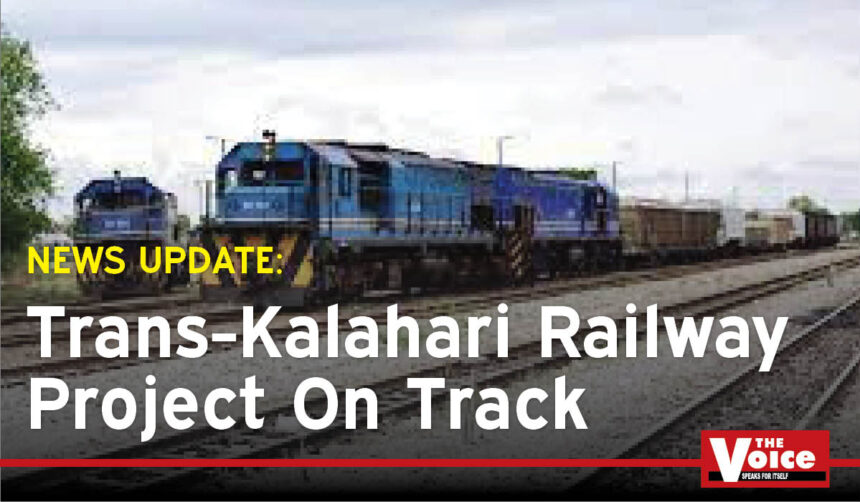
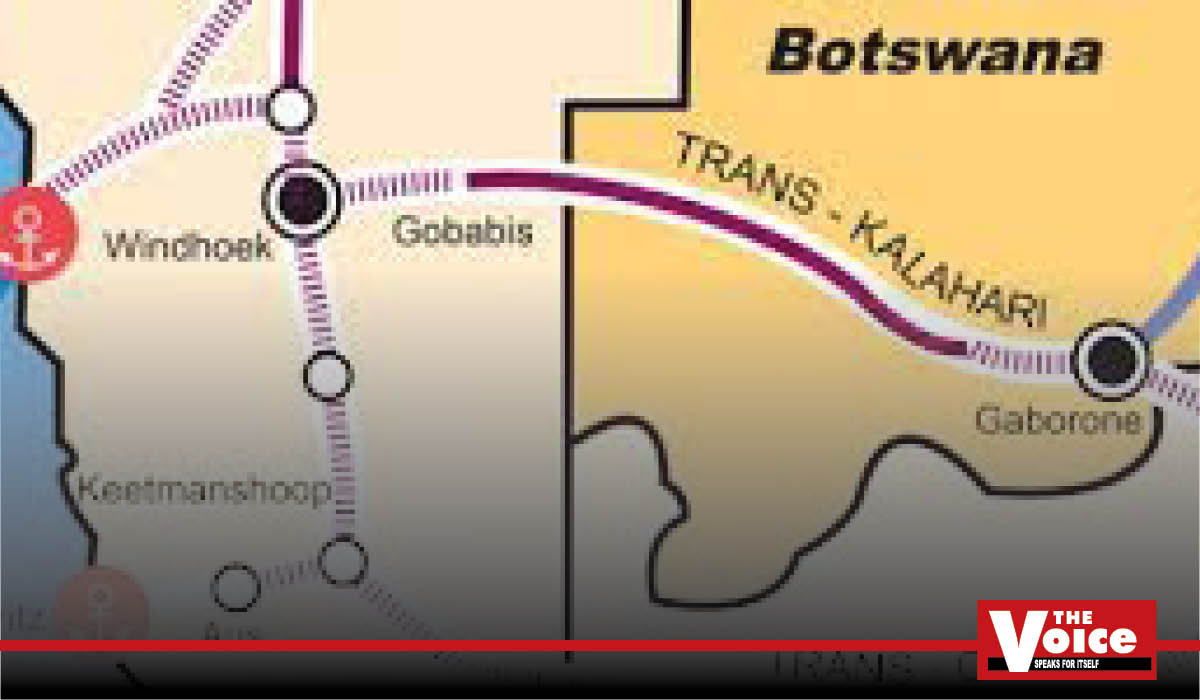
The governments of Botswana and Namibia have reaffirmed their shared commitment to advancing the Trans-Kalahari Railway (TKR) Project, an ambitious infrastructure initiative aimed at enhancing regional connectivity, trade, and socio-economic development between the two countries and the wider Southern African region.
Botswana’s Minister of Transport and Infrastructure, Noah Salakae, and Namibia’s Minister of Works and Transport, Veikko Nekundi, underscored their continued dedication to the project during a joint Ministerial Committee meeting held in Maun this past Friday, August 15, 2025. During the meeting, the two ministers signed a new agreement on the project.
Nekundi described the railway as an ambitious undertaking that will connect the two nations and further integrate their economies into the continental and global trade systems.
“The TKR promises more than a railway line; it promises new jobs and new skills. It supports our goals of economic diversification, poverty reduction, and inclusive growth,” he said.
He called on all involved stakeholders to deliver the project through a transparent Public-Private Partnership that brings real value to both nations.

“Our undertaking must include sustainable development in practical terms, ensuring that the project is structured to deliver tangible progress on environmental and social goals,” he added. “Environmental considerations must be integrated at every stage, from design to development and implementation.”
Rail infrastructure, Salakae noted, remains the backbone of integrated markets. With the African Continental Free Trade Area now a reality, he emphasized the need for efficient movement of goods, particularly bulk commodities, across the continent.
“Not only goods,” Salakae stated, “but through the African Continental Free Trade Area, people, ideas, and investments will also reach regions that have long been left behind. Africa is calling.”

According to Salakae, the TKR is a development project first, and a transport project second.
“The history of great railway lines from North America’s Transcontinental to the Orient Express shows that they do more than carry freight; they create entirely new geographies of opportunity,” he said. “This is where the concept of planning gain becomes critical: the added economic and social value created when infrastructure is developed in coordination with land use, housing, industry, and services.”
Salakae also highlighted the natural synergies between the Trans-Kalahari Railway and the existing Trans-Kalahari Corridor, which links South Africa, Botswana, and Namibia by road. He noted that both initiatives share the strategic objective of connecting Southern African countries to global markets through fast, efficient, and reliable transport.
“By aligning the two projects, we can create a fully integrated multi-modal corridor that combines rail, road, and border infrastructure,” he explained. “This will offer traders and investors a seamless logistics platform. Merging our planning and governance structures will avoid duplication, optimize resources, and strengthen our case for international financing.”
Together, the railway and road corridor can form a single economic spine across Southern Africa, a development Salakae believes will multiply benefits for every community along the route.
The Trans-Kalahari Railway Project is reported to be on track, within budget, and aligned with its approved implementation roadmap.