



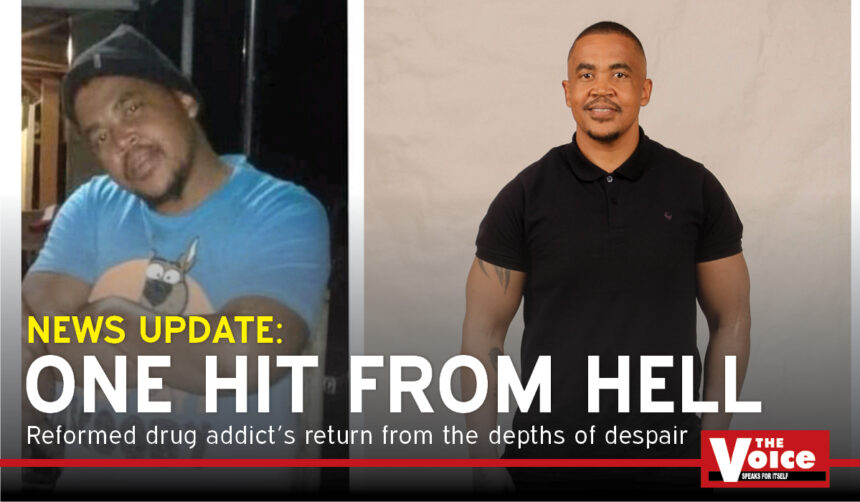
Reformed drug addict’s return from the depths of despair
According to a recent study from the World Health Organisation (WHO), last year alone, over 3 million deaths worldwide were attributed to drugs and alcohol abuse.
Botswana has not been spared from the deadly pandemic, with youth across the country trapped in the unrelenting grip of substance abuse.
However, Tumelo Sengawane is living proof the story can have a happy ending.
The 37-year-old Molepolole native grew up in Gaborone, full of promise, a decorated karate champion who brought home medals with the national team.
But behind the podium places and the smiles was a deep grief he never processed, one that would shape his life in ways he couldn’t imagine.

“I lost my sister when I was eight, she was my best friend. The pain of losing her left a hole in me I didn’t know how to fill,” he shares.
As a child, Sengawane found solace in friends who drank, smoked and partied hard.
“I thought it was normal as it helped numb the pain,” he remembers.

Alcohol, cigarettes, and marijuana became part of his teenage routine.
By the time he reached Form 2, his priorities had changed completely.
“I would skip tournaments to go to shows and drink; I thought that was the life.”
Ten years after the loss of his sister, tragedy struck again, with the sudden passing of his father.
“I leaned on alcohol and weed even more. I didn’t realise I was making choices that would later destroy my life.”
Inevitably, Sengawane progressed to harder substances.

“I graduated to cocaine and CAT while in varsity; it wasn’t just about fun anymore it was an escape,” he explains.
Senganga describes addiction as something that slowly takes over every part of you.
“You start thinking you are in control, but the drugs and alcohol start making the decisions for you. You wake up and realise your dreams are gone, your family is gone, and you don’t even care.”
He failed academically, lost direction and began fighting frequently while intoxicated.
“I would get into fights and not even remember what happened. It all felt normal, it was madness disguised as fun.”
Then came the night that changed everything: a bloody scrap at Gaborone’s once-popular Lizard Lounge.
As a sign of his muddled mind at the time, despite the significance of the event, Sengawane can’t remember exactly when it happened.
“It was either 2009 or 2010 November. I had been drinking, smoking, and using CAT. An argument over a girl turned violent. Two guys came at me, I grabbed a softball bat and hit one of them in the head. He collapsed. I thought I had killed him,” recalls Sengawane.
The man was rushed to hospital and slipped into a coma.
“My mind shut down,” he says quietly. “I went numb, I left the scene and drove off, ready to end my life. I even thought of crashing my car into traffic, I didn’t want to live.”
But fate had other plans.
“I called my mother before doing anything. I told her everything. She didn’t scream or hang up. She just said, ‘Come home, we’ll fix it.’ That phone call saved me and maybe the other man’s life too.”
The victim eventually recovered, Sengawane was arrested and charged with grievous bodily harm, to which he pleaded guilty.
Sentenced to jail on 25 January 2015, prison became both his punishment and salvation.
“At first I was angry, ashamed, and broken. But then I realised God put me here to save me from myself.”
For the first time in years, he was sober long enough to see clearly, something that brought him closer to God.
He started to dream again. Inside those walls, Senganga promised himself that if he ever got another chance, he would use his story to help others escape addiction.
“While I was in prison, I heard that some of my old friends were now living in drug houses, paranoid and destroyed by substances. That could have been me, I knew I had to change.”
But the road to recovery was far from straight.
After his release in March 2016, Tumelo tried to rebuild his life but fell into old habits.
“I didn’t go back to hard drugs, but alcohol and cigarettes had a grip on me. People think quitting alcohol is easier because it’s legal, but it’s worse because it’s everywhere: weddings, funerals, paydays, everything.
“I’d go 24 hours sober and then relapse. It was painful because people had stopped believing in me, even my own family.”
Yet each relapse became a lesson. Sengawane realised recovery is not about perfection. It’s about persistence. Every time you fall, you rise again.
In April 2019, Tumelo decided it was time to reclaim his life and find support. He returned to his mother’s house and declared he was quitting. She didn’t believe him at first.
“Recovery is much easier when you do it for yourself,” stated Sengawane.
He started sharing his journey publicly, through Facebook; people mocked him but he stayed the course.
Today, Sengawane is five years clean. With his bulging muscles, toned frame and glowing skin, he is the picture of good health.
The reformed addict runs a youth-focused cleaning company, Primitive Cleaning Solutions, employing young people and mentoring them to stay away from drugs.
He also founded Drug Free Is The New Cool, a non-profit organisation that spreads awareness, supports recovering addicts, and promotes mental wellness.
On 28 November, the NGO will host a special event under the theme ‘Navigating Recovery’, focusing on helping youth, individuals and organisations understand alcohol and substance use and its impact on mental health.
The event will feature experts in addiction recovery and mental health, including Sengawane himself, who will share his experience.
“We want to build a youth centre where young people can find mentorship, life skills, and hope. The drug crisis is real and we need community solutions,” he warns.
Senganga’s story comes at a time when the rise of cocaine, meth, CAT, and new synthetic drugs has gripped the nation, while alcohol abuse continues to claim lives and futures.
Health experts warn that more young people are turning to substances to cope with stress, unemployment and trauma.
Sengawane believes recovery must start with serious conversation on reform.
“We need to stop judging addicts and start understanding them. I wasn’t a bad person, I was a broken one and broken people can be healed,” he concluded.