



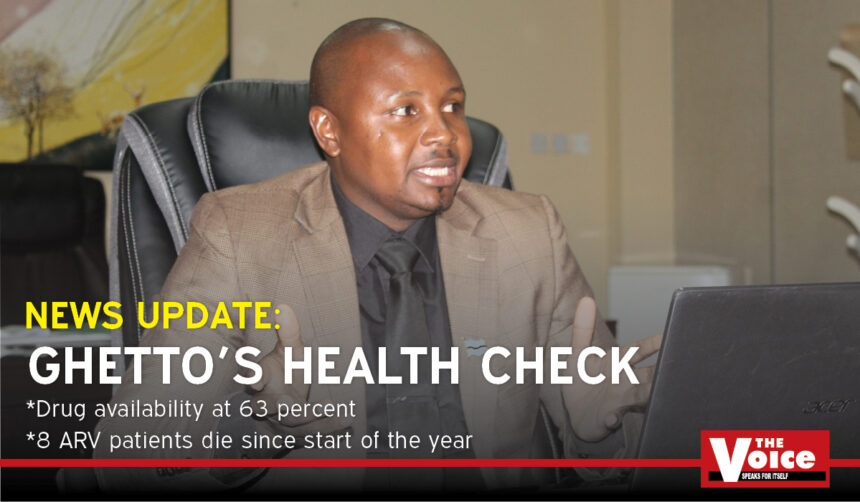
*Drug availability at 63 percent
*8 ARV patients die since start of the year
In keeping with much of the country, Francistown is facing numerous health challenges, with shortage of medicine and dilapidated health facilities topping the list of woe.
Speaking at a full council session last week, City Mayor, Gaone Majere admitted the problem runs deep, with some facilities in such poor condition that service delivery and patient safety is severely compromised.
The Mayor gave the example of the maternity wing at Gerald Estate clinic, which is currently out of action due to structural challenges.
To allow for the necessary maintenance works to take place, a decision was taken to temporarily relocate maternity services to Donga Clinic, with effect from April.
Mayor Majere further revealed drug availability in the clinics remains a significant struggle.

“Overall, the average drug availability for the clinics remains below the national target of 97 percent. Vital drugs are at 56 percent, essential drugs at 47 percent, necessary drugs at 83 percent and non-drugs at 83 percent,” he said, adding Anti-Retroviral (ARV) availability currently stands at 86.7 percent.
“While this is relatively high it still falls short of optimal levels. The situation calls for strengthened supply chain management, sustained funding, and closer collaboration with central health authorities to ensure uninterrupted access to essential medicines and improved health outcomes for the residents of Francistown,’ he said.
While no link has been established between the mortalities and lack of essential drugs, a report by the Umbrella Development Committee (UDC) shows that the city has recorded an increase in deaths among the 21, 886 patients enrolled on ARV programmes. In total, eight people have died since the start of the year (four male and four female).

The Mayor decried critical workforce shortages across specialists, medical officers and nurses, resulting in heavy workloads and long waiting times at many clinics.
“Laboratory and radiology services are disrupted by consumable and equipment constraints, creating backlogs. Blood supply remains under pressure, posing risks for trauma and obstetric emergencies,” said Majere.
Honing in on the positives, the second city’s first citizen praised the health workforce for continuing to deliver in the face of such adversity.
“Theatre and maternity services remain functional, with strong obstetric output. Specialist support, HIV services, and laboratory cross-support have helped sustain essential care through adaptive measures,” noted the Mayor, further stating that the Ministry of Health and hospital leadership are actively stabilising supply chains, repairing and placing critical equipment, outsourcing selected tests, strengthening inter-laboratory collaboration, and escalating staffing and procurement support to restore services.
The country is still navigating a challenging recovery from severe national medicine shortage, with drug availability showing gradual, albeit incomplete improvement following a State of Public Health Emergency declared in August 2025.
The Ministry of Health reported last year that drug availability in some health facilities was as low as 17 percent, and the government’s response has been to prioritize critical medication, including anti-asthmatics, anesthetics, sutures and ARVs.