
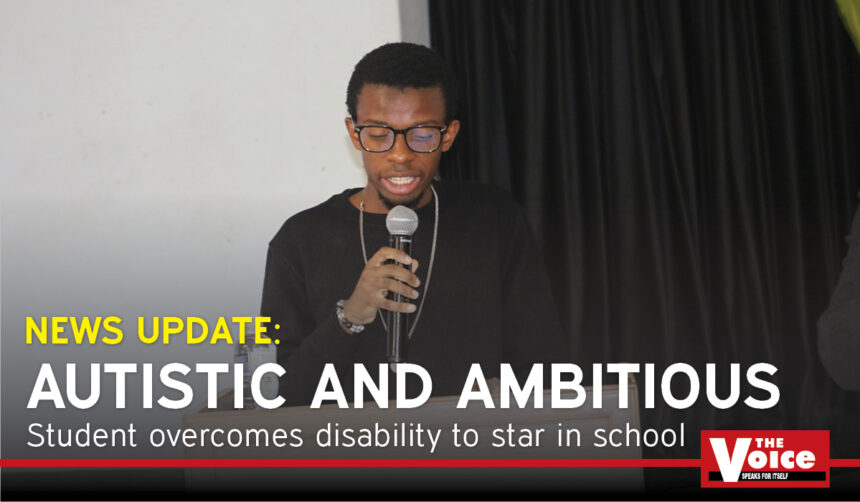
Student overcomes disability to star in school
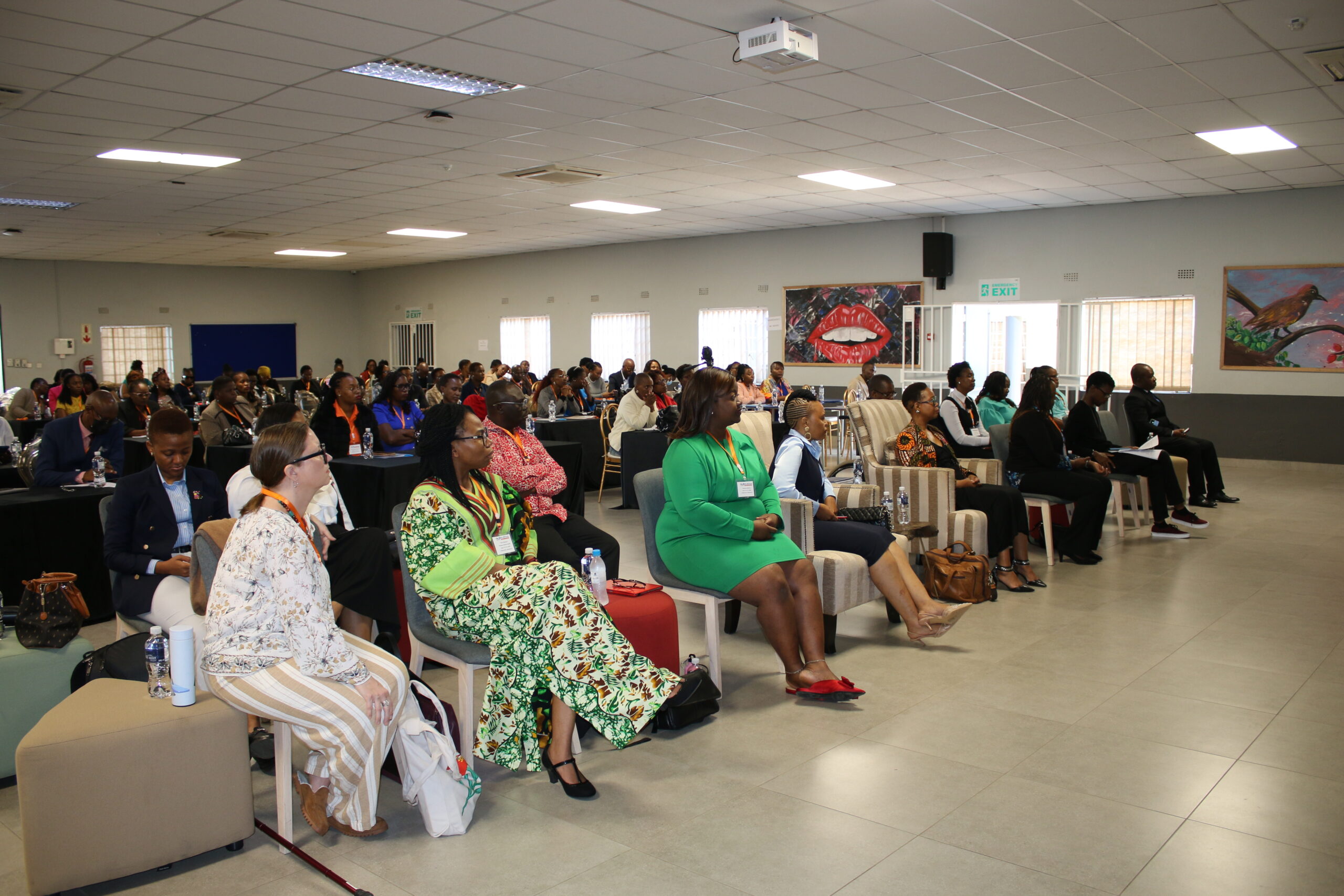
Last Thursday, The Voice team stepped into the Pan-African Congress on Autism at Gaborone International School, welcomed into a room alive with languages, cultures and shared purpose.
From ‘good morning’ to ‘dumela,’ ‘molweni’ to ‘salibonani,’ voices from across the continent blended into a single hum of unity, a reminder that while we come from different places, some conversations demand we sit together as one.
Autism, often misunderstood and rarely discussed in depth, is a neurodevelopmental condition that affects how individuals communicate, interact and experience the world around them.
It exists on a spectrum, meaning no two autistic individuals are the same; each carries a unique way of thinking, learning and expressing themselves.
While some may require significant support in daily life, others live independently, excelling in academics, arts and innovation.

Yet across this spectrum lies a common thread: a society still learning, and often struggling, to understand and accommodate neurodivergence.
It was against this backdrop that 21-year-old Kgosi Lefa Tau took to the podium, calm, composed and resolute in voice.
Introducing himself as ‘a son, brother, grandson, cousin and friend’, the Ramotswa native grounded his story in humanity before identity.

“I’m also a young person living with autism in Botswana, one in a growing community of people who have either been diagnosed with Autism recently, during their childhood or in their later life.”
His own diagnosis came at the age of four, describing the journey that has followed as a blessing but one not without its challenges.
Tau’s words carried the weight of lived experience, not polished for applause, but honest enough to provoke reflection.
“No one would have imagined that within the next few years, I would successfully finish my IGCSE and A-Level studies with over 40 points,” he shared, pausing proudly as if to let the weight of his achievement sink in.
But Tau was deliberate in resisting the temptation to package his life as a perfect success story.
“I do not want to come here and talk about a merely positive, unchallenging victory story. This is because the journey taken to get here was not easy,” he said firmly.
Behind the academic accomplishment lay years of occupational therapy, speech therapy and the financial strain that came with accessing quality care.
While institutions like Thornhill Primary School and Maru-A-Pula School provided an enabling environment, Tau acknowledged a painful truth: with school fees ranging from P25, 200 to P38, 600, such opportunities remain out of reach for many.
“I am always reminded that there are many families in this country who unfortunately cannot even remotely afford the resources and support needed,” he said.
For Tau, the struggle extends beyond personal experience into a broader, systemic concern, what he called a war for recognition and support.
“It is about attaining genuine acknowledgement and support from the government,” he explained, pointing to policy gaps that exclude neurodivergent individuals from critical assistance.
He highlighted how definitions of disability often overlook autism, leaving many without access to funding and educational support.
Equally troubling, he noted, is the financial burden tied to autism care, from therapy to specialized education.
“Autism is one of the most expensive conditions to assess, treat and monitor over a long period of time,” he reiterated, breaking it down into three essential aspects: structure, independence and mindset.
Yet perhaps the most moving part of his address was his reflection on families.
“Parents of Autistic children suffer,” he said candidly, acknowledging the emotional, mental and economic toll often hidden behind closed doors. He spoke of breakdowns, sacrifices and the quiet endurance of caregivers navigating a system that does not always meet them halfway.
Tau did not shy away from calling for change.
“Autism Awareness is as much of a pivotal, important political issue as access to basic needs,” he asserted, urging government and society alike to rethink priorities and policies.
His vision extended beyond advocacy into possibility, imagining a Botswana where neurodivergent individuals are fully integrated, supported and empowered to contribute meaningfully.
In his own life, that vision takes shape through ambition.
Tau dreams of building a film and television production within BW, one that tells local stories on a global stage.
First though, he has his sights set on an acting course at Columbia College in Chicago, America.
But even that dream is threatened by financial barriers to tertiary education.
“It is very easy to fall towards the other side of the divide whereby the dreams I have die before they even begin,” he admitted.
Still, his message remained anchored in hope and action.
“I implore everyone to not only listen, but to act,” he urged.
As his speech drew to a close, the room sat in reflective silence, not out of discomfort, but out of recognition. Recognition of truth, of gaps, of responsibility.
For The Voice team, the encounter was more than coverage, it was a moment of awakening.
In Tau’s words lived the realities of many unheard voices, and in his courage stood a call that could not be ignored.
We left the congress not just informed, but deeply moved, reminded that being different does not mean being less.