



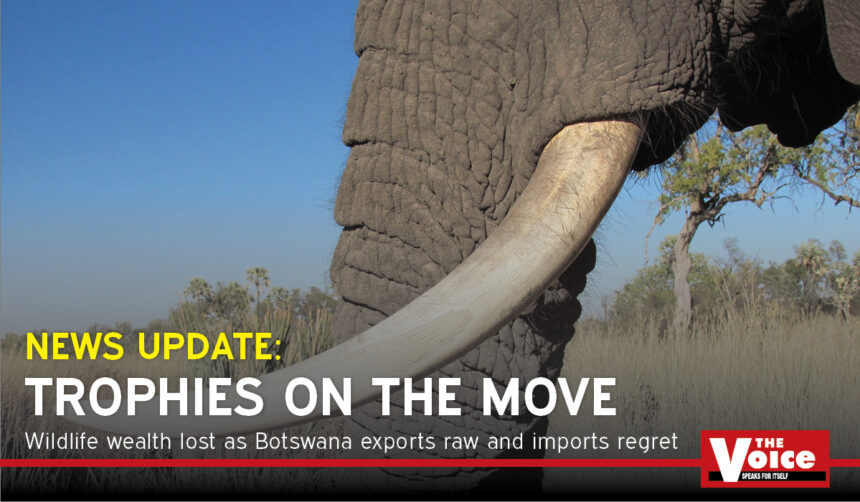
Wildlife wealth lost as Botswana exports raw and imports regret
Botswana’s soft stance on trophy hunting is proving costly, with wildlife trophies and raw wildlife by-products leaving the country each year, only to return as finished goods made elsewhere.
Over the years, conservationists and industry experts have called Botswana to develop a fully fledged wildlife economy and value chain, but those calls have not been heeded.
As a result, the country continues to export wildlife trophies and raw by-products without turning them into finished products.
Data from Convention on International Trade on Endangered Species of Wild Fauna and Flora (CITES) trade database shows that a significant portion of wildlife trophies and raw by-products from trophy hunting are exported to countries such as South Africa, where they are turned into finished products including souvenirs, decorative items and taxidermy pieces.
The government, however, appears to be is waking up to the economic losses caused by this model. They have committed to developing a wildlife economy that will address issues of tourism revenue leakages associated with exporting raw wildlife products.

Mochaba Safari owner, Debbie Peake is of the view that the government is not stepping up enough to protect and safeguard the sector.
Mochaba Safari is one of only two taxidermy business in Botswana focusing on turning wildlife trophies and raw animal products into finished products.
Peake remains hopeful that the government through the Ministry of Environment and Tourism is committed to developing the wildlife economy.

“It is certainly an important component for creating employment and keeping added value in Botswana,” said Peake.
She said the continued export of raw trophies to South Africa is largely driven by limited local processing options.
“Equally, with the government soft position on hunting and wildlife related issues, outside investment to facilitate these businesses is insecure. Investors are not going to invest in businesses if the sector is not confident to warrant them to invest,” added Peake.
Department of Wildlife and National Parks (DWNP) Director Moremi Batshabang confirmed that government is developing a value chain for wildlife trophies by ensuring that by-products from trophy hunted wildlife generate income for locals.
“The development of Wildlife Based Economy Strategy will give clear action on what to do to derive maximum benefits from wildlife resources. There are ongoing intentions to review the legislative frameworks to facilitate the industry in order to improve benefits from wildlife,” he added.
University of Botswana -Okavango Research Institute Professor, Joseph Mbaiwa has however expressed frustration that the issue has been raised for years without any tangible results.

“The biggest cheat of our wildlife-based tourism industry is that it emerged and grew with a focus on meeting the needs of international tourists as opposed to promoting locals or national interests,” said Mbaiwa.
He said that the sector has long been dominated by multi-national tourism companies.
“Multinational corporations are interested in extraction more than anything else, hence the high revenue leakages in the tourism industry in Botswana,” he added.
Mbaiwa also pointed to limited political understanding of the wildlife value chain and a lack of political will as major obstacles to industry reform.