




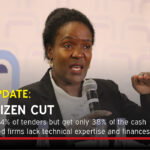
*Locals win 74% of tenders but get only 38% of the cash
*Citizen-owned firms lack technical expertise and finances
When Botswana’s economy entered a recession during the second half of 2024, a total of P32 billion in tenders was awarded for the 2024/25 financial year, with only P12 billion or 38% by value, going to citizen-owned companies.
This disparity has raised concerns for the Public Procurement Regulatory Authority (PPRA.
The figure further indicates that 58,154 out of 78,800 awards went to citizen companies, which represents 74% of the awards, but most of them were lower value contracts. The PPRA attributes the gap to limited technical and financial capacity among citizen owned companies to compete for larger, more complex projects.
“This relatively low share in value is primarily due to the awarding of a few high-value contracts to non-citizen companies, which significantly skews the distribution despite higher participation from citizen entities. Notably, vulnerable groups including women, youth, and persons living with disabilities were awarded tenders worth P5 billion, representing 26% of the total procurement value,” said PPRA Chief Executive Officer, Tumelo Motsumi.
Briefing the media on Monday, she noted that the inclusion of vulnerable groups brings a glimpse of hope towards inclusive procurement and targeted empowerment efforts.
More Read
The CEO said that larger value of projects are awarded through formal tendering (75%), while smaller transactions dominate micro procurement (73%). She added that the low uptake of open bidding is concerning, as it undermines the principles of transparency, competition, and value for money that open procurement is designed to promote.
“Due to poor planning and execution, most formal procurements (79%) are administered through other methods and not open bidding. Citizens are largely awarded many projects (74% ) in number, but only 38% in value. The few mega projects are largely awarded to non citizens,” she said.
Motsumi said that there are high incidents of corruption in the public procurement space and this has led to poor project implementation and delayed service delivery, cost overruns, and substandard projects and services.

Poor procurement planning has not only made life difficult for the private sector, it has also led to shortage of medicines in government health facilities, lack of textbooks and furniture in schools, poorly maintained infrastructure such as roads and government buildings, and most critically, low or no job creation.
According to Statistics Botswana, the country is struggling to create more than 2000 sustainable jobs a year.
Motsumi said that poor procurement systems have created a huge gap between the rich and poor and has eroded public confidence in the government in general.
Meanwhile, the PPRA is implementing its 2024-2028 Strategic Plan following the transition from PPADB to PPRA.. Performance at year end stood at 84.5% against a target of 85%, slightly below target due to human and financial resource constraints.
Shortage of skilled manpower has forced PPRA to embark on training and professional development of personnel in public procurement development through five short- term non-credit bearing courses/modules accredited by the Botswana Qualifications Authority (BQA).
Compliance with procurement processes continues to present a huge challenge especially for councils.

“While Ministries indicate relatively stronger compliance levels, Parastatals and Councils require immediate support and intervention. Absence of an e-procurement system makes compliance monitoring not only expensive but also inefficient. PPRA is unable to have real time information on procurement and is also unable to monitor on-going contracts. Record keeping and access to records is also a challenge given the manual system which makes retrieval difficult,” she said.
For his part, the PPRA Acting Executive Director-Supplies, Lucas Kennekae, acknowledged some contentious issues within the Public Procurement law, particularly the preference and reservation scheme; specifically, Part XI, which favours citizen-owned companies. “We are happy that notwithstanding the current challenges with this issue, we continue to see an increase of award of tenders to citizens,” he said.