




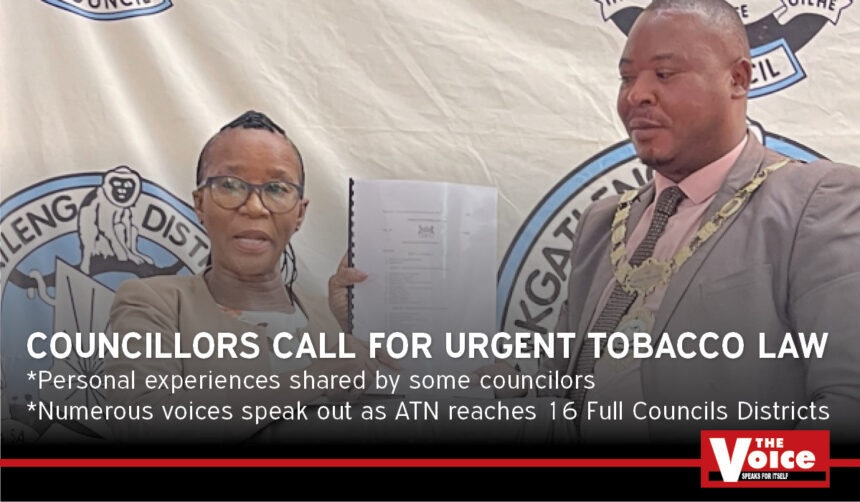
*Personal experiences shared by some councilors
*Numerous voices speak out as ATN reaches 16 Full Councils Districts
*Personal testimony brings urgency to calls for stronger protection against tobacco and nicotine dependence
Kgatleng District councilors have called for the government to expedite the implementation of Botswana’s Tobacco Control Act, 2021, warning that continued delays undermine efforts to protect communities from tobacco-related harm and young people from nicotine dependence.
The concerns emerged during an Anti-Tobacco Network (ATN) engagement on 24 September 2026, involving Deputy Council Chairperson Solomon Letshwiti N. and fellow councilors.
The discussion brought together concerns about youth vaping, enforcement in public spaces, and the personal realities of addiction. Senior councilor Mogapi Mooki D. gave the engagement a particularly personal dimension, drawing on his own struggle to overcome addiction.
His contribution underscored the seriousness of dependence and the importance of preventing it before it takes hold.
“There is a need for stressing the need for prevention, public awareness, and support for people battling dependence. We appreciate the Anti-Tobacco Network for educating communities and raising tobacco-control concerns with local authorities. WE urge for stronger efforts to prevent young people from becoming dependent on tobacco and nicotine products,” Mooki said.

His reflections brought the discussion beyond legislation and statistics to the difficulties people face when trying to overcome addiction.
They also highlighted two connected responsibilities: protecting young people from becoming dependent and supporting those already struggling.
Personal experience strengthens the call for prevention

As a senior and elderly Councilor, Mooki D brought the perspective of lived experience to a discussion centred largely on protecting the next generation.
His account illustrated why warnings about addiction deserve serious attention. Recognising a harmful habit and overcoming it are different challenges, and his contribution emphasised the need for support alongside public education.
Within the tobacco-control discussion, that distinction matters. Awareness campaigns seek to discourage people from starting, while those who have developed dependence may need help to stop.
Mooki’s intervention gave weight to both aspects of prevention and care.
His appreciation of the Anti-Tobacco Network (ATN) also highlighted the value of creating spaces where communities and their representatives can discuss addiction openly.
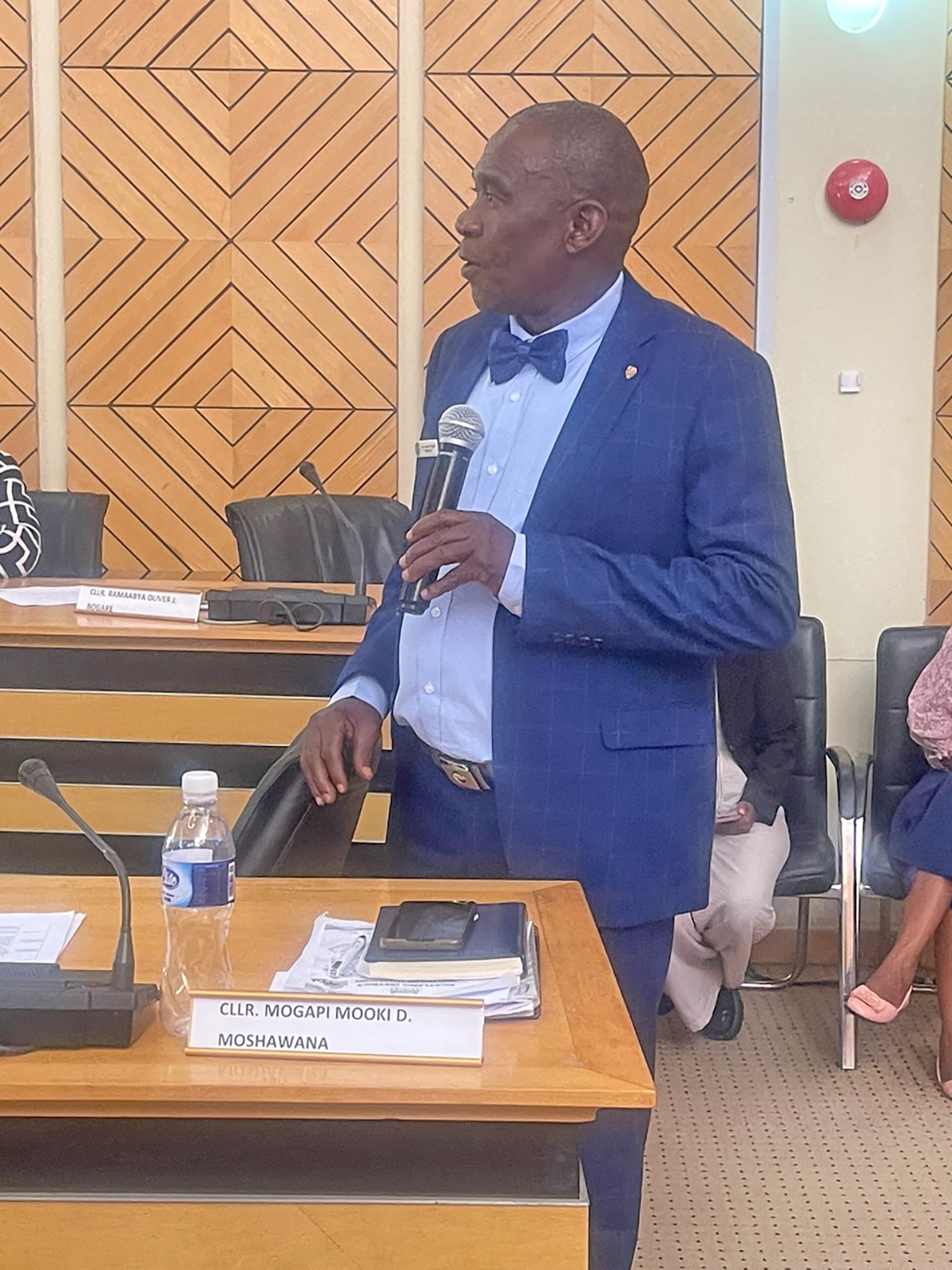
The engagement allowed personal experience to sit alongside evidence and policy, giving councillors a broader basis for considering the consequences of delayed action.

Concern over young people’s access to nicotine
The Kgatleng discussion formed part of ATN’s Clean Air Project engagements, which, according to the network’s supplied account, have reached 16 full councils across Botswana.Across these engagements, councillors have raised concerns about children accessing tobacco and nicotine products, the growing visibility of vaping and the continued exposure of non-smokers to tobacco smoke.
Electronic cigarettes have become a particular focus. Flavours, pleasant aromas and unfamiliar device designs have raised concerns about their appeal to young people and the difficulty parents, teachers and other adults may face in recognising them.
Evidence presented during ATN’s council engagements has added urgency to these concerns.
ATN’s presentation to councils citing the 2024 Global School-based Student Health Survey and an electronic-cigarette use figure of 11.1 per cent among children.
The report also highlighted concerns about vaping devices being mistaken for toys.
The figure provides context for the councillors’ calls for stronger protection. However, the concerns being raised are also grounded in what local representatives report seeing in their communities: access to nicotine products, smoking in restricted areas and the increasing familiarity of vaping among young people.
Closing the gap between law and implementation
The Tobacco Control Act, 2021, provides a framework for regulating tobacco sales, advertising, packaging and exposure to tobacco smoke.
It includes restrictions on sales to people under 21 and defines tobacco products broadly enough to include electronic cigarettes and non-nicotine delivery devices. The legislation also provides that it comes into operation on a date appointed by the Minister through an order published in the Government Gazette.
According to the material supplied by ATN, the regulations required for implementation have been developed but remain unsigned.
The network and councillors are calling for the outstanding steps to be completed so that the legislation can be effectively implemented.
The Kgatleng engagement added another district’s voice to that appeal. The concern is that legislative protections cannot deliver their intended benefits without the practical arrangements needed to apply and enforce them.
For local authorities, implementation must address everyday questions about compliance, tobacco sales and protection in public spaces.
Public education remains necessary, but councillors want it supported by an effective regulatory framework.
Councils report enforcement concerns
The concerns raised in Kgatleng reflect issues identified by councillors elsewhere in Botswana.
Charles Hill East Councillor Matthews Moapare, in the supplied account of the wider engagements, expressed frustration over smoking in areas where it is prohibited.
“People smoke even where it is clearly prohibited,” he said. His observation highlights the gap between displaying restrictions and securing compliance. Councillors have argued that inconsistent enforcement weakens efforts to protect public spaces and undermines the message that tobacco-control measures should be taken seriously.
Chobe District Councillor Boitumelo Kanyetu also raised concern about tobacco-related illness and the exposure of non-smokers to second-hand smoke.
He called for greater public awareness and cooperation between communities, councils and national authorities.
Ghanzi District Councillor KelebogileTaeyele supported the call for the regulations to be signed, emphasising the need for a clearer framework to protect children and regulate tobacco and nicotine products.
Together, these contributions show that the demand for action extends across districts. Local representatives are linking national policy to the consequences they encounter within their communities.
Gaborone Deputy Mayor echoes urgency
The councillors’ concerns also align with remarks supplied from Gaborone Deputy Mayor Mankie Sekete, who warned about the consequences of leaving the 2021 legislation unimplemented. “The Act was passed in 2021, and if it is still not in use to this day, I am afraid that we will soon find ourselves responsible for problems that we cannot come back from,” she said.
Sekete raised particular concern about the appeal of vaping products to young people and the perceptions created by their flavours and aromas.“The pleasant smells and flavours are fooling young people into thinking it is not as dangerous as it actually is,” she said.
She also urged greater awareness of tobacco use in its different forms, including smokeless tobacco such as snuff, and encouraged members of the public to heed medical advice.Her remarks reinforced the wider message emerging from the engagements: tobacco-control efforts must address both established practices and emerging products.
Protecting the next generation and supporting those already affected
The Kgatleng engagement brought prevention, enforcement and personal experience into the same conversation. Letshwiti and fellow councillors’ participation added to the call for Government to complete the outstanding steps necessary for implementation. Mooko’s testimony gave that discussion a human dimension, reminding participants that dependence is a lived struggle requiring attention and support.
His contribution also strengthened the case for acting early. Protecting young people from tobacco and nicotine dependence means addressing access and awareness before patterns of use become established, while ensuring that people already battling addiction are included in the response.
The appeal emerging from the council engagements is for legislation to be matched by practical action: effective implementation, consistent enforcement, sustained public education and support for those seeking to overcome dependence.
For Kgatleng’s councillors, the priority is to turn the promise of stronger tobacco control into protection that communities can experience.