




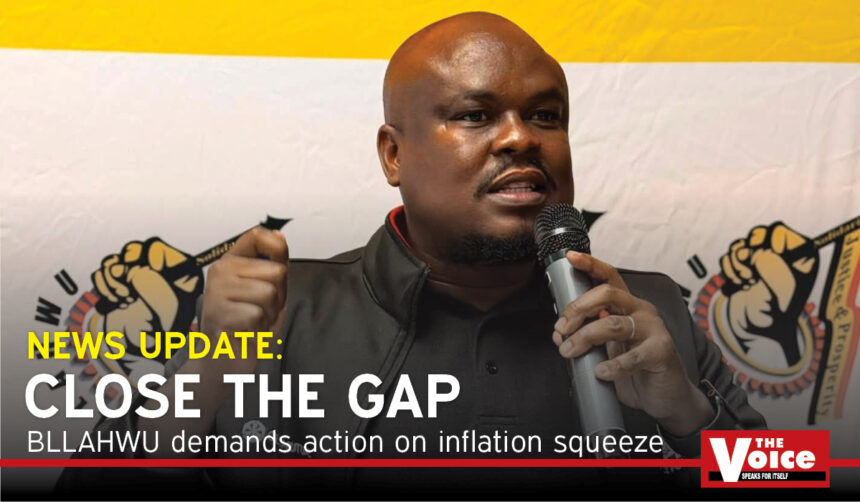
BLLAHWU demands action on inflation squeeze
The Botswana Land Boards, Local Authorities and Health Workers Union (BLLAHWU) has issued a stark call for government to close the widening inflation gap facing workers, warning that global economic instability and a resurgence of anti-transformation forces threaten the gains of the working class.
Addressing delegates at the union’s governing council and welcoming newly elected branch executive committees, Secretary General Motshidisi Onyebo Mafoko painted a grim picture of the current economic landscape, where workers continue to bear the brunt of unemployment, inequality, and mounting pressure on public services.
“Workers organise for tangible improvements in their daily lives,” he said.
He emphasised that the struggles facing Batswana workers are not isolated but are exacerbated by global conflicts disrupting trade and commodity prices.
The SG also sounded alarm over political developments since the last general election, warning of a resurgence of anti-transformation, right-wing populist forces that threaten to roll back hard-won labour rights.

Despite the challenges, Mafoko welcomed two progressive government moves: the revival of the Bargaining Council and the transition of primary healthcare services to Local Government. He described these as steps in the right direction, while urging branches to prioritise recruitment, cultivate principled shop stewards, and remain focused on the union’s Strategic Plan 2024–2028.
In his remarks, BLLAHWU President Thatayaone Kesebonye congratulated the newly elected Branch Chairpersons and the Central Executive Committee, which took office in December 2025.
He described the Governing Council as both an organisational review structure and a political forum tasked with proposing reforms ahead of the Annual General Meeting.

Kesebonye noted that government faces pressing socio-economic challenges, including gender-based violence, defilement, rape, unemployment, and poverty, all of which require urgent policy intervention.
With government’s economic promises only partly fulfilled amid a downturn in the diamond sector, Kesebonye called for honest introspection on the nation’s priorities.
“Should well-pensioned retirees qualify for the Old Age Pension while poor pensioners on the Destitute Programme are required to work under Ipelegeng or Ikageng?” he questioned, challenging the fairness of current social welfare policies.
He, however, welcomed the government’s move to insource security, cleaning, and gardening services across departments and ministries, describing it as a decisive break from the privatisation agenda that had cost the government heavily.
“This will bring citizens into more decent employment,” he said, contrasting the move with previous outsourcing arrangements that he argued had undermined worker conditions and drained public resources.
The BLLAHWU President reported positive growth for the union, which has added just over a thousand new members since December 2025. He credited this growth to stability at Central, Regional, and Branch level, while acknowledging that many workers in the Public Service, State-Owned Enterprises, and the private sector remain unorganised.

He also announced upcoming Regional Shop Steward training sessions aimed at strengthening worker representation and reaffirmed BLLAHWU’s continued investment in legal representation for its members.
Describing BLLAHWU as the “Vanguard of the Working Class,” Kesebonye reaffirmed the union’s socialist ideological position, adopted at its 2022 AGM in Nata, before pledging continued engagement with government through tripartite structures to influence labour policy.