



*Unborn babies pay the price for mums who skip HIV tests
*Activists say stigma drives mums away from testing
A troubling trend among expectant women who are opting out of HIV testing during pregnancy is raising fears about the potential risk of mother-to-child transmission despite Botswana’s strong prevention programmes.
Despite the country’s hard-won gains in the HIV response, a small but concerning number of pregnant women are said to be declining tests, a decision Dr Morrison Sinvula, an obstetric expert, has called “reckless”.
Data from Statistics Botswana’s Maternal Mortality Ratio 2022 Report indicates that of the 89 maternal deaths recorded, 36% of the women were HIV positive, 46.1% were HIV negative, while 18%- nearly one in five, had an unknown HIV status at the time of death.
Dr Sinvula says while HIV testing in Botswana is offered on an opt-out basis, refusal remains legally permissible.
He indicated that, given Botswana’s high testing coverage and treatment uptake, the proportion of pregnant women with undiagnosed HIV has significantly decreased.

Sinvula emphasized that unknown HIV status represents a system gap, but it is not the primary determinant of maternal mortality at the population level.
“Historically, HIV was a major indirect contributor to maternal deaths. Today, with expanded ART coverage and high viral suppression rates, HIV-related maternal mortality has declined,” he added.
He indicated that the risk of mother-to-child transmission (MTCT) is high if a mother is HIV-positive and untreated: “With effective ART and viral suppression the transmission is lower,” he added.

Dr Sinvula indicated that knowing a mother’s HIV status during pregnancy allows for immediate antiretroviral therapy (ART) initiation, viral load monitoring, prevention of vertical transmission and reduction in preterm birth and low birth weight associated with uncontrolled HIV.
He emphasized that routine antenatal HIV testing remains essential to protect both mother and child.
Sinvula emphasised that although Botswana has made significant progress in reducing HIV-related maternal deaths through expanded treatment access, gaps still remain.
He however acknowledged that despite the risks, Botswana remains a global leader in the HIV response and has surpassed the 95-95-95 UNAIDS targets, with national performance.
“95% of adults living with HIV are aware of their status, 98% of those diagnosed are receiving antiretroviral therapy (ART) while 98% of those on ART are achieving viral suppression,” said Sinvula.
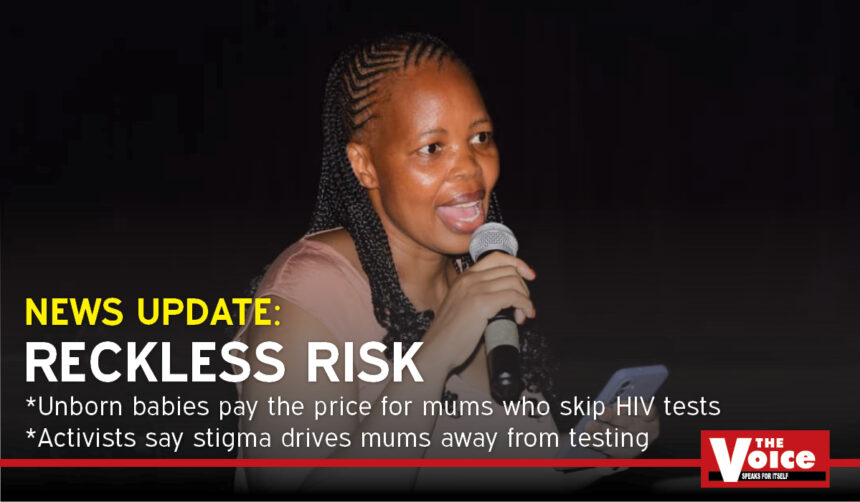
An HIV Activist, Boikobo Kenosi who has dedicated her life in HIV activism, community awareness and fighting stigma, believes the issue runs deeper than statistics.

“Pregnant women are encouraged to test early and enrol on PMTCT programme to protect their unborn babies from HIV transmission. When we still see cases of mothers not enrolling on PMTCT and babies being born HIV positive that tells us that the problem may be deeper than lack of information,” added Kenosi.
She is of the view that some women are afraid of discovering a positive result and facing stigma from the families, partners and communities.
“Others fear that if they test positive, they may be blamed, rejected and abandoned by their partners. There are women who are already dealing with emotional stress, denial and depression during pregnancy which can make them to avoid testing,” she said.
Kenosi called for a shift in awareness campaigns, emphasising that activists and people living with HIV should be given a platform to speak directly to communities from a place of lived experience.
Ministry of Health Spokesperson, Dr Christopher Nyanga acknowledged that a small number of expectant women prefer not to be tested. He said the uptake of Prevention of Mother-To-Child Transmission (PMTCT) services stands at around 98%.
Dr Nyanga further confirmed that when a pregnant woman declines an HIV test, there is a risk of passing the virus to her unborn baby if she is positive. “There is also a risk of continued weakening of the mother’s immune system if they are positive since they will not be taking any ARVs,” he said.
Nyanga further added that while the risks are clear, Botswana continues to uphold voluntary testing in line with human rights principles.
“Women are educated and they make their own choices on whether to test or not,” he said.
Health experts may point to the UNAIDS 95-95-95 benchmark as a sign of remarkable progress in the HIV response, but for activists like Kenosi, even a small number of preventable transmissions is one too many.