




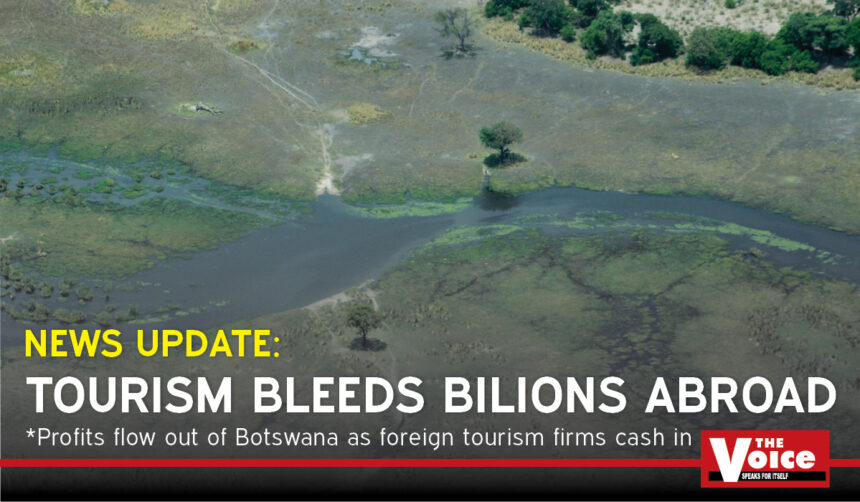
*Profits flow out of Botswana as foreign tourism firms cash in
The tourism industry, a key pillar in Botswana’s economy, is said to be losing billions of pula annually through external leakages- with funds estimated at P7.9 billion exiting the country each year.
Environment and Tourism Minister, Wynter Mmolotsi, recently highlighted this staggering figure to parliament, explaining that much of the money spent by foreign visitors fails to circulate within Botswana’s economy.
“These leakages occur when profits made in Botswana are transferred abroad not forgetting the importation of goods and services outside the country which has contributed to this leaks and this underscores the need to strengthen domestic supply chains and local value creation,” Mmolotsi said.
Research from the Botswana Institute for Development Policy Analysis (BIDPA) sheds light on the causes of these financial outflows.
A major contributing factor is the tourism sector’s heavy reliance on imported goods.

Additionally, the widespread use of offshore booking systems funnels revenue away from domestic providers.
These challenges are particularly pronounced within Botswana’s strategy of low-volume, high-value tourism.
While this model aims for high-spending visitors, it also creates vulnerabilities for economic leakage if not properly managed.

Mmolotsi said other constraints limiting the growth of this sector are entry and connectivity which remain critical barriers.
“Restrictive immigration policies limit our openness to international markets while inadequate infrastructure particularly absence of a national blue route linking key tourism sites hinders accessibility,” said Mmolotsi adding that poor connectivity in rural areas further affects communication and visitor experience.

According to the latest statistics, tourism contributes 5.1% to the gross domestic product therefore holding so much untapped potential to aid economic diversification and employment creation. As it stands, the sector employs 50 000 people with that estimated to increase by 28% in 2029/30 financial year.
However with plans to address the identified leakages and strengthen the local economic impact of tourism by retaining more tourists spending within Botswana, the sector can contribute more effectively to national development. According to Mmolotsi, government is rolling out new measures to address massive financial leakages within the country’s tourism sector.
“The upcoming plan seeks to plug these losses by strengthening local value chains, boosting citizen participation, and reviewing procurement policies to ensure that more of the tourism revenue remains within the domestic economy. Empowering Batswana-owned tourism enterprises and supporting community participation will be central to reforming the sector. Our sector suffers from insufficient product diversification therefore our offerings remain narrow, brand visibility is weak. Many communities are oblivious of the sector’s potential benefits and funding to support innovation and expansion is inadequate,” said Mmolotsi emphasizing they will explore heritage tourism, smart digital platforms, green infrastructure financing and cross border cultural festivals to diversify offerings and attract new markets.
Reports have previously shown that a large portion of tourist bookings and hospitality supplies come from foreign companies, limiting local benefits.

Further, majority of safari lodges in the Okavango and Chobe areas which are mostly foreign owned have their bookings made abroad which means revenue and profits end up in Europe.