


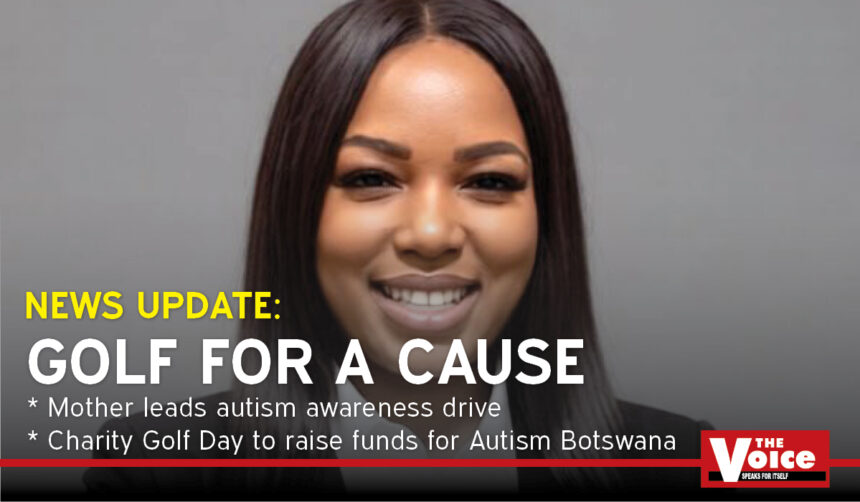
* Mother leads autism awareness drive
* Charity Golf Day to raise funds for Autism Botswana
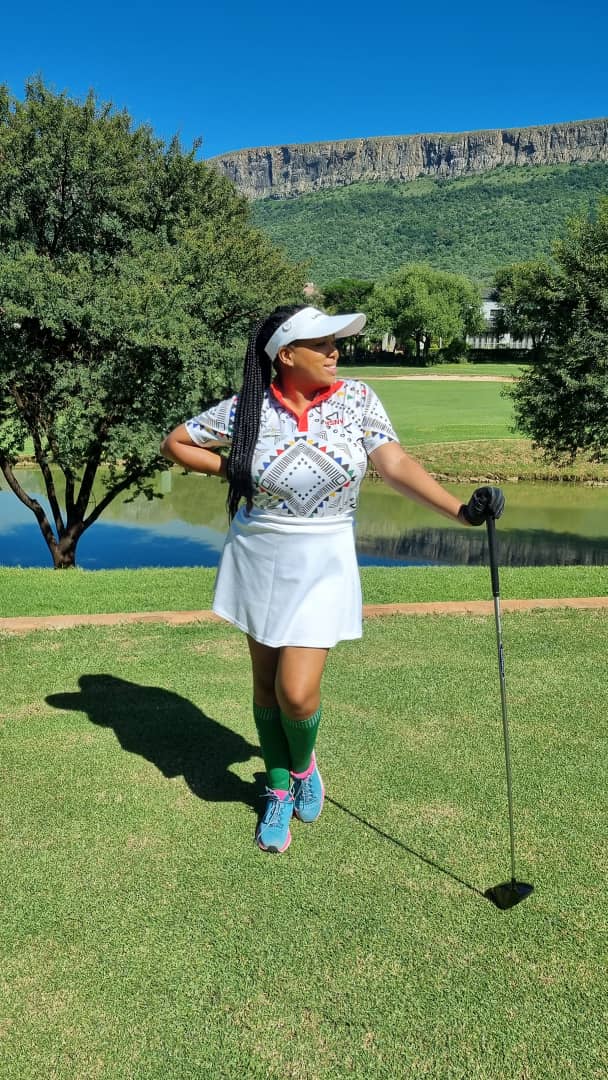
Seven years ago, when Melissa Modise gave birth to her son prematurely at seven months, she and her husband could not have anticipated the journey ahead.
Today, she describes her son as “differently abled”, a term she intentionally uses in place of “disabled,” because of her belief that children on the autism spectrum have different, not lesser abilities.
Raising a child with autism spectrum disorder (ASD) has come to define the Modise family’s life in profound ways. Now, in recognition of World Autism Awareness Month this April, Melissa is channelling her experience into advocacy. She is
organising an Autism Awareness Charity Golf Day on 30 th April at Gaborone Golf Club, aimed at raising both awareness of autism, and funds for Autism Botswana – an organisation committed to supporting individuals on the spectrum and their families.
Melissa’s early experience as a mother was marked by both hope and uncertainty. After spending two weeks in the neonatal intensive care unit, her son appeared to develop normally during his first two years. But by age three, concerns began to emerge.
“He was not meeting developmental milestones; he did not say ‘mama’ or ‘dada,’ rarely responded to his name, and often flapped his hands. Our initial emotions of fear, shock, grief, and confusion eventually turned into acceptance and
determination,” Melissa recalls, adding, “It opened our eyes to a world that is often misunderstood, under-supported, and quietly endured by many families.”
Seeking answers, the family consulted doctors, who initially suggested enrolling him in school. However, by the end of the term, teachers recommended a speech assessment. What followed was a complex and often frustrating process involving multiple professionals, including speech therapists and an ear, nose, and throat (ENT) specialist. Despite early assurances that his hearing was normal, progress remained limited.
After six months with little improvement, the family sought a second opinion. This led them to South Africa, where more comprehensive testing revealed that their son had partial hearing loss due to blocked ears. He underwent surgery to insert grommets (small tubes placed in the eardrum to improve ventilation), which significantly improved his ability to hear.
Back in Botswana, the journey continued. They started speech therapy with the highly sought-after Tehniat Siddiqi, though it took eight months to secure an appointment. “During those eight months, we unknowingly spent a lot of money on a therapist who lacked proper qualifications, with little transparency in how sessions were conducted,” Melissa laments, adding they were later recommended an occupational therapist (OT), Frida Deurwaarder, whom she credits with teaching her son essential life and behavioral skills, helping address sensory challenges and emotional regulation.
Four years later and the progress has been remarkable. Melissa proudly shares that her son is now able to communicate more effectively, follow instructions, and carry out basic tasks independently.
“He has also become more social, engaging with other children; it’s a miracle, given that he once avoided interaction. Frida has truly transformed my son. The difference is like night and day,” she says proudly, adding while the lad may not be fully self-sufficient yet, the change from where he started is extraordinary.
The Modise boy attends Dipeo Group of Schools, “An incredibly supportive and inclusive environment,” she says, adding, “He’s now in reception, and it’s amazing to see him writing his own name, something I never imagined possible. The school truly celebrates diversity, teaching all children to accept and include one another,” she gushes.
This progress was not without setbacks though. “At one point, a prescribed medication left him withdrawn. This made me much more cautious with his treatment,” she says, highlighting how easily families can be misinformed or unable to challenge such decisions.
Melissa emphasises that her ability to access quality care and good schools came down to having the financial means. “I am fortunate enough to afford it. But can the average person just cross the border for a procedure? The grommet surgery alone cost about R35 000. What about families in villages with no medical aid?” she asks rhetorically.
In Botswana, one in 46 kids have autism as of 2026. “Many children remain undiagnosed or excluded from formal education.
This gap is what drives this initiative. The golf day is designed to be more than a fundraising event.
It will incorporate interactive and educational elements to deepen understanding of autism.
Each hole will feature a different activity or insight, encouraging participants to engage with the realities faced by individuals on the spectrum. One such feature is a ‘silent hole,’ where players must complete the round without speaking, simulating the experience of non-verbal individuals,” she explains.
Melissa is clear about her expectations for impact. She wants transparency in how funds are used and hopes to see tangible outcomes, whether supporting diagnostic assessments, therapy access, or resources for families.
“It’s important to show exactly how support is changing lives,” she says.
The event, she notes, is open to both golfers and non-golfers. “Participants can register in teams of four, while others can contribute through sponsorships, donations, or prize support. Registration begins at 9am, with tee-off scheduled for 11am. We are seeking partners who share our vision of a more inclusive Botswana – individuals, businesses, and the broader community – to be part of something that truly matters. Let’s play with purpose!”
Looking ahead, Melissa hopes to make the golf day an annual event, expanding its reach and impact each year.
With support already pledged from several local organisations, she is optimistic about building sustained momentum around autism awareness in Botswana.
Ultimately, her goal is to ensure that families navigating autism feel seen, supported, and empowered.
“Early intervention can make a profound difference. But it starts with awareness, and a willingness to understand,” she says in conclusion.
For sponsorships and contributions contact: Melissa Modise on 75 512 388 or email: melissaseretse@gmail.com.