


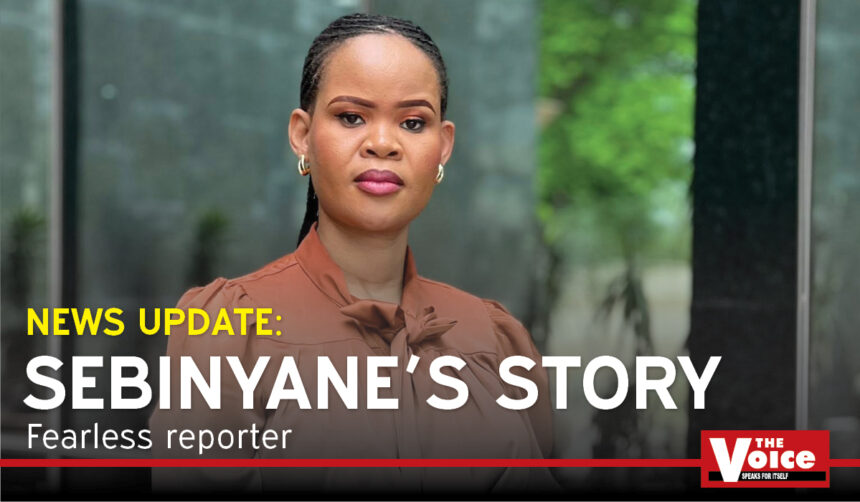
An award-winning investigative journalist, Rachel Sebinyane has made her name as a fearless storyteller, uncovering truths others shy well away from.
A freelance Editor at BTV, the 33-year-old is best known as an intrepid crime reporter, famed for her well-researched, hard-hitting pieces.
An expert on death row matters and life behind bars, the passionate journo’s Facebook page, ‘Untold Stories with Rachel Sebinyane’ now stands at 340, 000 followers, a number that is growing by the day.
This is Sebinyane’s story so far…
Let’s first get to know who Rachel is?
Thank you The Voice for giving me this opportunity! I am a lady born and bred in Thamaga village 33 years ago. I am a mom and married to my amazing husband from Nshakazhogwe (smiles).

And in terms of your professional qualifications?
I did Broadcasting in Radio and TV at Limkokwing University as well as Criminal Investigation with Alison, an Irish online platform for higher education that provides certificate courses and accredited diploma courses.
So what sparked your fascination with crime reporting?
What fascinated me is the need to understand the mind of a criminal! I really want to understand why people commit crimes! How come someone can kill four women?
You describe yourself as a ‘Death Row Enthusiast’ on FB, what draws you to those dark stories?
I generally believe there is a story behind the headline! Men on death row have untold stories and I really believe that these men have the solutions for the pandemic we are grappling with today: GBV. I believe with them having gone through therapy, death row inmates can bring solutions to the murders we are experiencing every week.

Covering such cases must bring you face-to-face with families of victims and the accused. How do you maintain objectivity while showing empathy?
I really appreciate this question. It’s one of the hardest parts of my work. When you sit with a grieving family or hear a death row inmate reflect on the moment everything went wrong, you feel the weight of both sides. I maintain objectivity by remembering my role. I am there to document the truth, not to take sides. But I also allow myself to be human. Empathy doesn’t compromise objectivity; it guides how I approach people, how I listen and how I handle sensitive details. I remind myself that every person involved is carrying unbearable pain in their own way. My duty is to honour their stories with fairness, accuracy and compassion.
Do you support the death penalty?
As a crime reporter, I remain neutral on the death penalty. It is a legal issue linked to justice, human rights and public safety. My role is to report the facts and help the public understand the issue, not to take sides.
How about from a personal perspective?
Same answer; remember there is a thin line between our own personal perspective and our role as journalists.
Fair enough! You’re also known for your in-depth research on prisons and prisoners. What moment made you realise this was the work you wanted to do?
My turning point came in 2016 when I sat with an ex-offender who openly narrated what led to his incarceration and what life inside prison had done to him. Listening to that raw, unfiltered story awakened something in me; a deep need to understand the justice system from the inside and to document the human realities we often overlook.
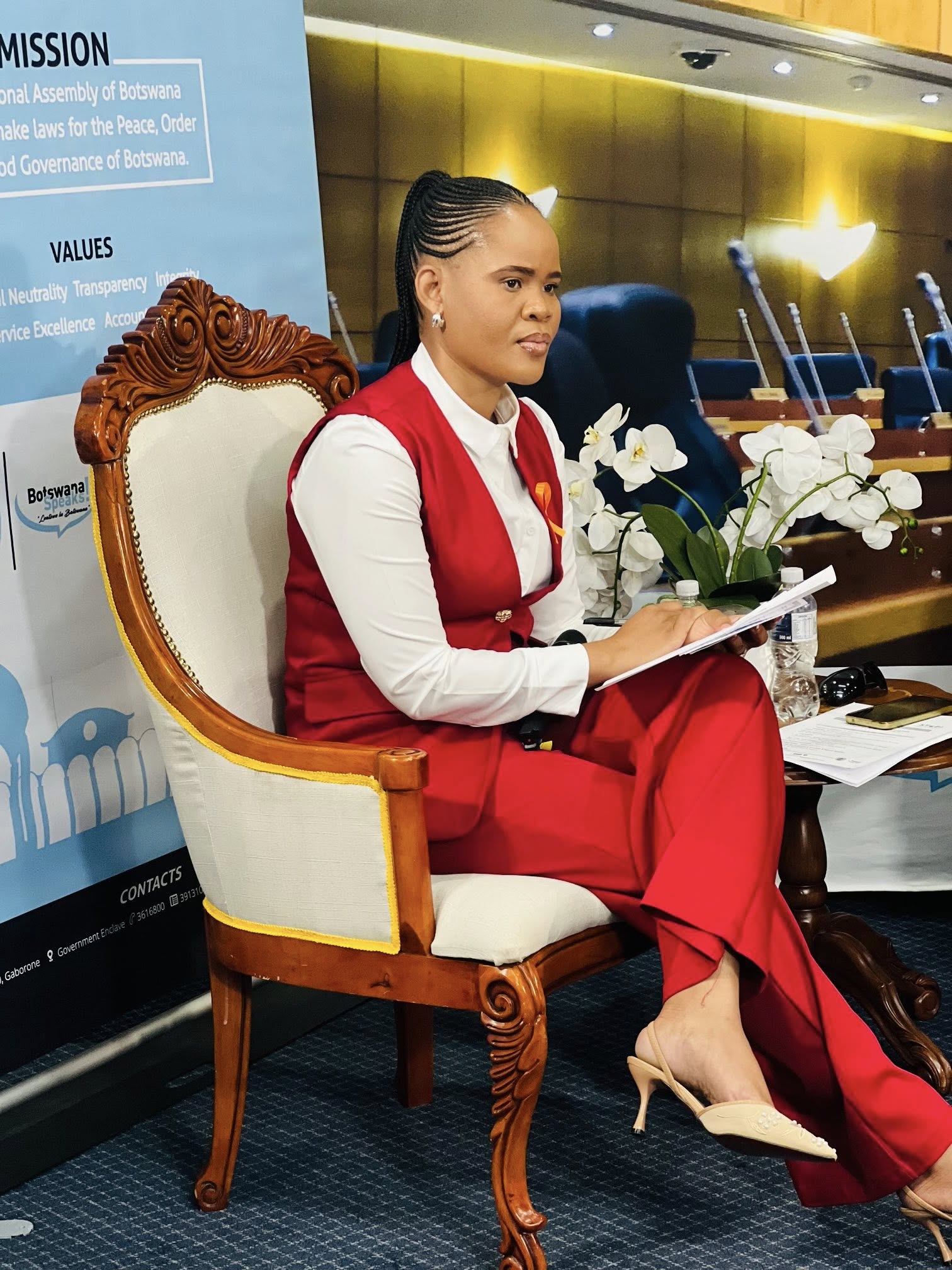
You’ve also moderated and spoken at high-level panels featuring Parliament, Prisons and Police. How have those engagements shifted policy discussions or public perception?
These engagements have helped shift the conversation from statistics to human stories. By bringing real experiences from victims, offenders and frontline officers into high-level spaces, I have seen policy discussions become more people-centred and urgent. My work has also influenced public perception, helping Batswana understand the complexities behind crime, justice and rehabilitation. In these platforms, I use storytelling to bridge gaps, challenge old narratives and push for a justice system that protects, rehabilitates and restores.
What’s the most challenging story you’ve covered?
The most challenging story I’ve ever investigated involved a severe case of child abuse. It forced me to confront scenes and testimonies that were emotionally overwhelming and ethically delicate. Protecting the child’s identity while still telling the truth required every bit of courage and sensitivity I had. That story pushed me beyond my comfort, reminded me why ethical reporting matters and deepened my commitment to being a voice for the most vulnerable.

Wow, sounds draining! But how do you balance your broadcast work with BTV and your page ‘Untold Stories with Rachel Sebinyane’? Which platform lets you dig deeper?
It’s definitely Untold Stories with Rachel Sebinyane. While broadcast work on BTV gives me reach and credibility, Untold Stories allows me to dig much deeper. It’s a space where I can take my time, unpack complex issues and tell the parts of the story that don’t always make it to mainstream television. The platform gives me freedom to investigate, to analyse and to bring out the raw human truths behind every case I follow.
Botswana’s criminal justice system is evolving. What reforms do you see as most urgent, and which ones feel stalled?
The most urgent reforms are those that strengthen rehabilitation and protect vulnerable groups. We need consistent psychosocial support for inmates, stronger child-protection mechanisms and better resourcing for GBV and sexual offence investigations. These are areas where change can immediately save lives and reduce reoffending.
Where progress feels stalled is in sentencing reforms, delays in the courts, and the full integration of restorative justice. We talk about them often but implementation remains slow. Until these gaps are addressed, the system will continue to struggle with overcrowded prisons, prolonged trauma for victims and limited reintegration opportunities for offenders.
From your research, what single change do you think could improve life for inmates and reduce the chances they will re-offend after being released?
If I had to choose one change, it would be consistent psychosocial support inside prisons. From my research, most inmates are not just serving sentences. They’re carrying deep trauma, untreated addictions and unresolved personal histories that contributed to their crimes. When those issues go unaddressed, they leave prison exactly as they came in or even worse.
Proper counselling, therapy and behaviour change programmes would not only improve their daily lives but also give them the internal tools to reintegrate and avoid reoffending. Rehabilitation starts in the mind and that’s where the system needs to invest the most.
Your investigative work sometimes uncovers corruption within law enforcement. What safeguards do you put in place to protect sources and yourself?
I protect myself and my sources by keeping identities confidential, avoiding digital trails and separating sensitive information from my day-to-day work. I never reveal a source without consent and I verify everything through multiple channels. Most importantly, I stay aware of my environment and only meet sources in safe, neutral spaces. Those small safeguards go a long way in this kind of work.
If you could interview one person currently on death row or a senior prison official, who would it be and what one question would you ask?
If I could interview one person on death row, it would be Simba Mampori, the man who killed four women at different times. My single question to him would be: ‘Looking back, what’s the one moment or choice you wish had been different? The one that could have stopped all this?’
For a senior prison official, I would choose the officer who participates in executions. And I would ask a deeply human question: ‘What part of you changes every time you witness a life being taken in the name of justice?’
Mhm deep indeed! Looking ahead, what new investigative focus do you want to dive into next?
Next, I want to dig into sexual abuse of minors in very remote areas and sodomy in our prisons. These are issues that are hidden, underreported and demand urgent attention
Wish you all the best on that! What advice would you give to young journalists dreaming of breaking big crime stories while staying true to ethical standards?
Stay curious and fearless! Chase the stories others won’t touch. But never compromise your ethics. In crime journalism, the truth is your weapon and integrity your shield. Always prioritise people’s stories over sensational headlines and remember: how you tell a story matters as much as the story itself.
Away from work, what keeps you busy in your spare time?
I recently learned how to swim with Propellers Sports Academy, and it’s been an incredible experience! I’m completely hooked! It’s challenging, exhilarating and unlike anything I’ve done before. And so healing!
On that happy note, we wrap up the interview and indeed the year with our usual parting question: Thank God It’s Friday – and Festive too – what are your weekend plans?
I’m dropping the kids off at my parents and then immersing myself in writing! I’m working on a very interesting book that I am not going to reveal now (laughing), a project I hope will teach Batswana a lot!