




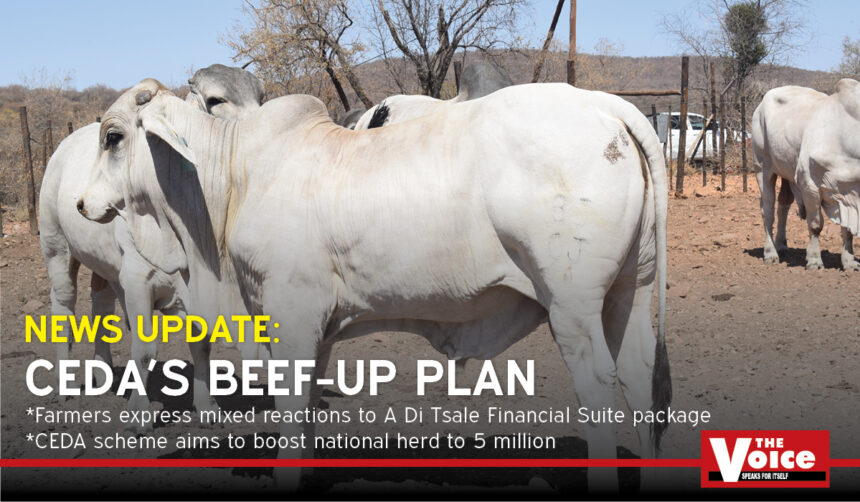
*Farmers express mixed reactions to A Di Tsale Financial Suite package
*CEDA scheme aims to boost national herd to 5 million
Following calls to rebuild and grow the national herd to five million and increase agriculture’s contribution to the Gross Domestic Product (GDP) to 6%, the Citizen Entrepreneurial Development Agency (CEDA) has launched the A Di Tsale Financial Product Suite.
The initiative seeks to close long-standing gaps in the cattle industry by improving animal health, reproductive performance, strengthening fodder production and water security, supporting better herd management, and providing financial products aligned with real livestock production cycles.
According to CEDA’s modelling, the packages are expected to contribute up to 1.49 million cattle towards the national herd within five years while also benefiting 6000 farmers and creating 10 530 jobs.
Mokgweetsi Mabote is one of the farmers who have welcomed the initiative, but questioned the feasibility of reaching the five-million target.
“It’s a fine programme which has new technologies not common in Botswana. We are used to artificial insemination and bulls, but embryo transfer is a new thing so I think it will help. I however, don’t think five million is realistic; we can maybe reach. The farming system we use here makes it impossible,” said Mabote, founder of Mosekakgwana Embryo Transfer and Artificial Insemination.
“Our cattle are starving; our winter seasons are longer than summer and the animals then depend on rainfall. Our farmers don’t want to feed the animals because it’s expensive. Subsidies should be in winter, not in summer when there is plenty of grassland,” he added.
Another farmer, Akeem Setswalo commended the programme for broadening access to support services.

“I believe there are some notable changes in this programme, especially the ability to access services without a business plan. Many Batswana were previously denied access to CEDA services as one was required to be a full time farmer. But we know for a very long time farming has been done at different scales with others doing it partially. It’s both possible and not possible to reach five million cattle. On paper it might seem simple, but practically we face drought, livestock theft, mortality, and people who farm casually. If we commercialise farming, then it can be possible,” Setswalo said.
For years, the decline in Botswana’s cattle population has been a national concern, impacting food security and the broader agricultural economy. The primary causes being a combination of environmental, economic, and management issues.
Botswana National Beef Producers Union (BNBPU) Executive Secretary, Alefeng Pilane, said he was impressed by the level of consultation and the anticipated impact on the farming value chain. “I like the fact that access requirements have been simplified. The issue of artificial insemination has come at the right time, but we also need high quality bulls for natural service. Fodder support is also good, we need nutrition, not just semen,” said Pilane adding that such programmes usually look good on paper but fail at implementation.

The livestock subsector remains the backbone of Botswana’s agriculture, accounting for up to 85% of total agricultural output. Yet the national herd continues to shrink due to drought, limited technical support, low adoption of technology, and structural market weaknesses.
“I believe this programme has a lot to offer, especially with reproductive technologies. But it’s not an easy thing. Farmers have to learn and give it time to bring intended results. Thuo-khumo is not new. It aligns with the previous programmes and what we need is implementation and execution. We have talked and it’s enough. Let there be action,” said Wameotsile Mahadile, a farmer at Morwamosu.
Botswana’s cattle herd once stood at 3 million heads, but decades of droughts, disease outbreaks, poor genetics and fragmented value chains have reduced it to 1.7 million.
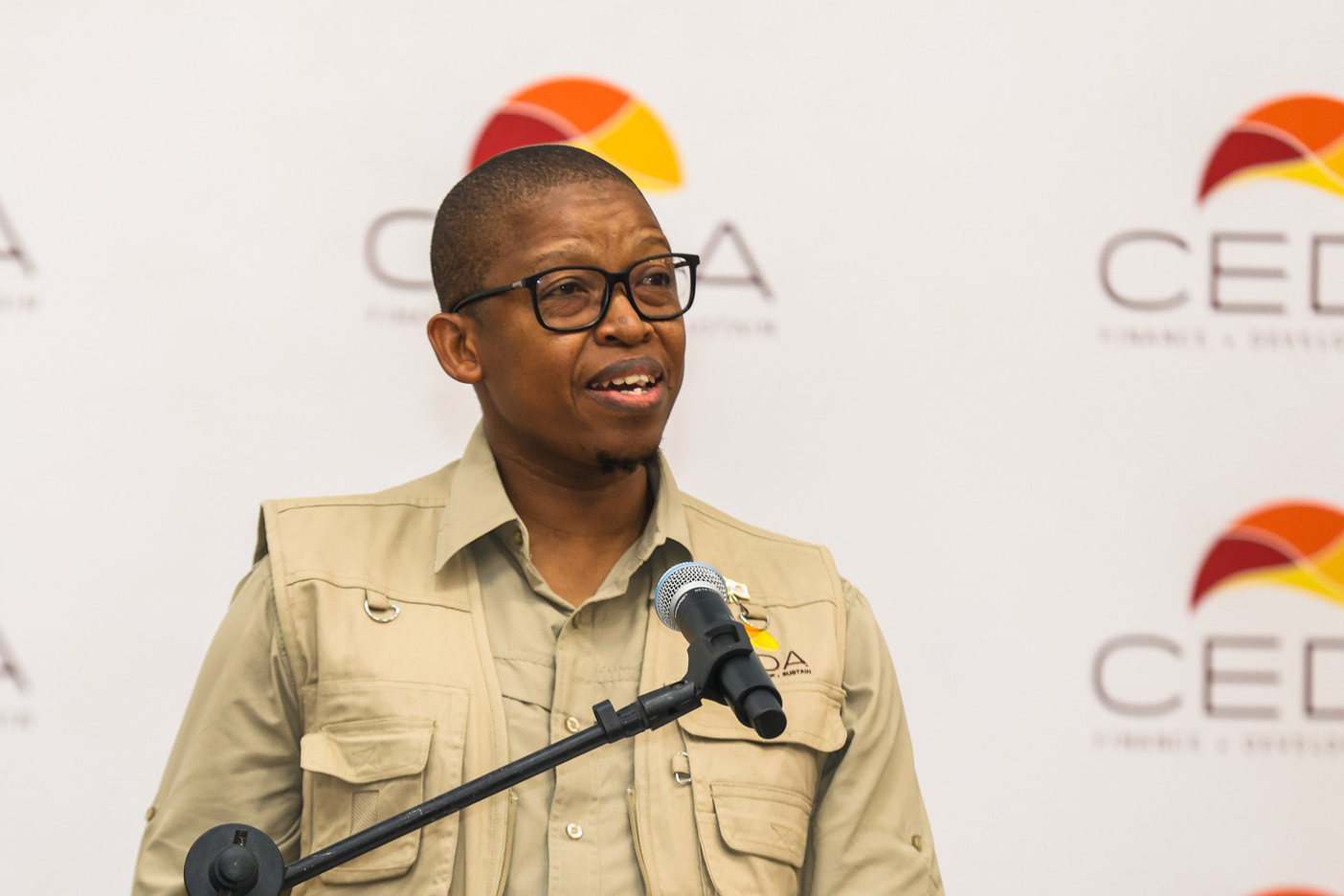
Speaking at the launch of the financial suite, Minister of Trade and Entrepreneurship Tiroeaone Ntsima said the programme represents a major shift in how government supports livestock production.
“This is not business as usual. It is a bold restructuring of how we finance livestock production in Botswana. For the first time, over 455,000 Batswana in the formal sector now have a structured, well-governed and supported way to participate in cattle production. This is not a loan product — it is a generational wealth-building instrument,” said Ntsima emphasising that every funded project creates jobs while successful farm stimulates local supply chains leading to improved herd which will contribute to a stronger, more resilient rural economy.
CEDA caretaker Chief Executive Officer Khalala Mokefane urged farmers to come together to restore Botswana’s position as Africa’s trusted beef powerhouse.

“Let us once again make our kraals symbols of innovation, resilience, and national pride. Let us remember every funded project is a seed of transformation; every thriving farm is proof that Botswana’s prosperity lies not in words, but in productive action. Our cattle are not just economic assets —they are part of who we are. They connect our past to our future, from kraal to classroom, from field to export market,” he said.














The initiative is good, we don’t hear much about the water subsidy plan to drill boreholes which also impact on the herd growth population. Water is essential in the farming industry.