

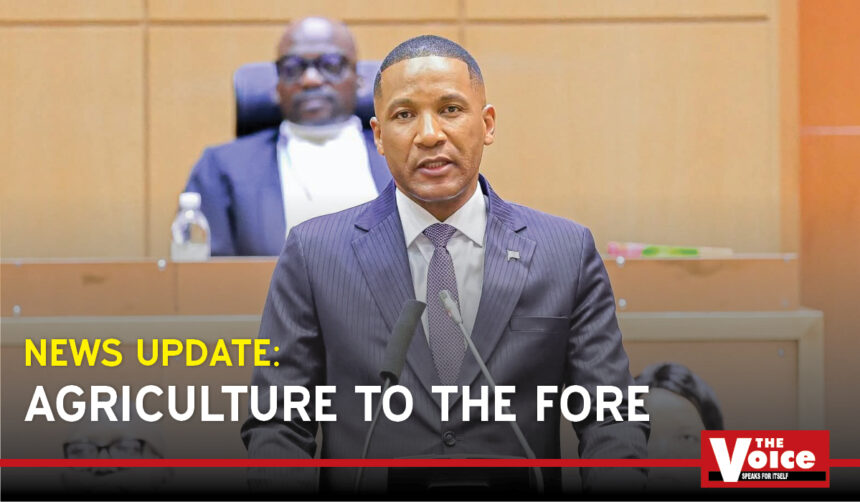
Agriculture has once again been identified as a sector with the potential to spearhead the country’s economic transformation and create much-needed employment.
Currently accounting for just two percent of Botswana’s Gross Domestic Product (GDP), President Duma Boko wants Agriculture’s contribution to grow to at least 6 percent ‘in the immediate term’.
To help achieve this, Boko called for a renewed focus on livestock production, aimed at increasing the national cattle herd from an estimated 1.7 million to 5 million by 2030.
Touching on another area that needs improving, the President mentioned low off-take rates (livestock removed from the herd for slaughter), which languish at 6 percent against a recommended 15 percent.
“Livestock contributes a larger proportion of Botswana’s agricultural GDP, anchoring rural livelihoods. Yet the sector faces mounting challenges of disease outbreaks, recurring droughts, and poor land management and production inefficiencies such as low calving rates, high mortality rates and lack of business development, which have eroded productivity and degraded the agricultural value chain,” noted Boko during his second State of the Nation Address (SONA) on Monday.

In response to this, Boko reminded the nation that his government launched ‘A Di Tsale’ in August, a scheme aimed at boosting beef sector productivity through extension support.
“Services advanced by this programme include animal health inspections, reproductive diagnostics, artificial insemination and farmer training in sustainable livestock management,” he explained, adding to reach the 5 million goal, govt will also target communal farmers by restoring rangelands and improving access to premium markets.
In regards to dairy production, Boko said government has developed a focused strategy for the sector through Milk Valley, a wholly owned subsidiary of the Botswana Development Corporation (BDC).

Although local production capacity for milk and related products currently stands at 13 percent, government’s ambition is to multiply this figure to 60 percent by next year.
To get this expansion moo-ving, govt are in the process of importing 1, 000 Girolando cattle from Brazil.
Analysing Boko’s big promises, Botswana National Beef Producers Union, Executive Secretary, Alefeng Pilane said that while his words were welcome, ensuring they become reality will not be easy.
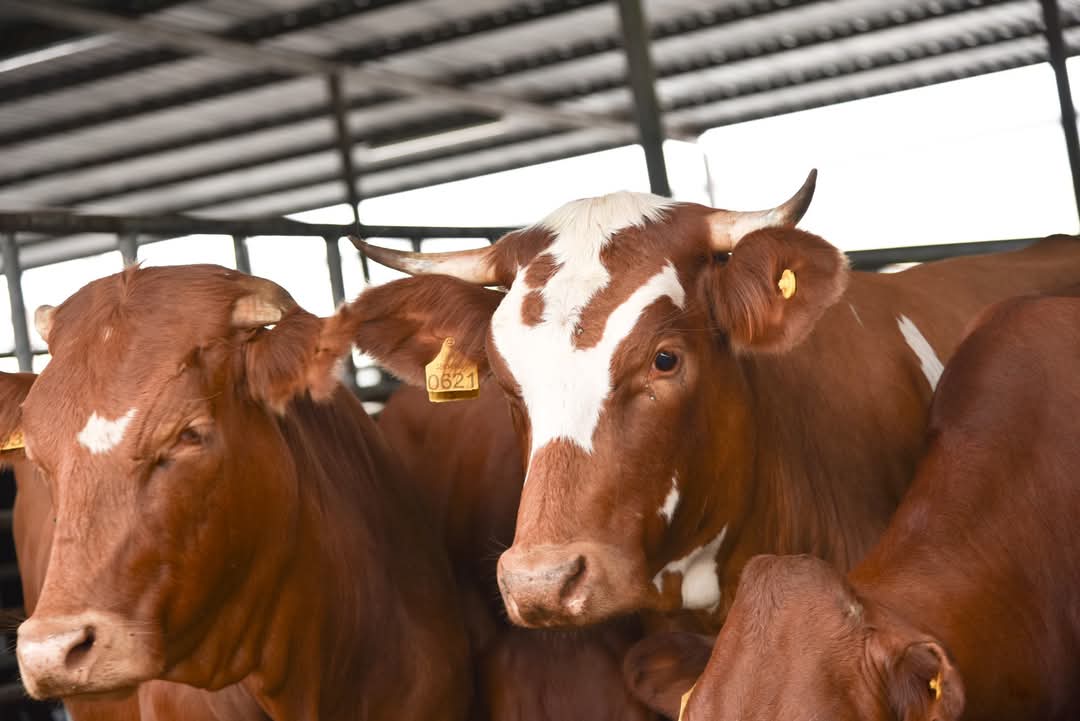
“The 5 million figure seems impossible; you need to consider other factors of cattle raising such as nutrition, fodder production and rehabilitation of grazing lands which should not be left behind. If we are to increase our herd, people are going to need bulls because artificial insemination cannot replace natural mating since it has its own failures. With regards to BMC’s turnaround time in paying farmers we welcome that, the only challenge is that farmers cry lower prices, we are still at a point where farmers are giving the offal free to BMC. We need a law that ensures farmers are paid fully for their cattle not only carcass,” said Pilane, further complaining of the delay in implementing the Meat Industry Regulatory Authority.
In terms of food production, the 2024/25 season saw a 34.2 percent increase in planted area, yielding an estimated 144, 000 tonnes in production, a massive improvement when compared to only 39, 795 tonnes in the 2023/24 season.

Accrued horticulture production rose to 88, 670 tonnes from 2, 400 hectares, yielding 77, 398 tonnes of vegetables and 11 272 tonnes of fruits, meeting 80 percent of Botswana’s national vegetable demand and 29 percent of its fruit demand.
In recognition of the importance of commercial scale farming to national food security, govt arranged a benchmarking trip for 16 local farmers to visit Bangladesh.
Led by representatives from Ministry of Lands and Agriculture, Letsema Horticulture Market, National Agricultural Research and Development Institute (NARDI) and Botswana University of Agriculture and Natural Resources (BUAN), the expedition included farmers from Fodder Producers, Fish Farmers Association and the Botswana National Beef Producers Union, among others.
These anchor farmers are now being facilitated to start and operate farms that will act as a point of reference and support for other farmers.
Botswana Horticultural Council Chairperson, Mogomotsi Moatswi was part of the team that went to Bangladesh, noting the journey proved extremely fruitful.
“We are on infrastructure development and irrigation systems to be put in place which is a gain for the sector. With that we can expand production with the right facilities in place. Bangladesh were like us before producing nothing but have managed to modify their systems and now they can feed themselves,” said Moatswi, adding signs are promising that government will heed to their calls in accelerating value addition and collection centres.