




CAAB on the up after overcoming severe turbulence.
On cloud nine, Civil Aviation Authority of Botswana (CAAB) CEO, Bao Mosinyi has described the country’s aviation sector as ‘admirable’, a stark contrast to the ‘terrible’ state he inherited in July 2021.
Addressing industry stakeholders, including President Duma Boko, during the official opening of a two-day Aviation Pitso in Maun last Thursday, Mosinyi proudly detailed CAAB’s remarkable turnaround.
He noted that in just four years, the organistation has gone from a struggling state-owned enterprise pre-Covid 19, to a high-performing parastatal.
“We are proud to say, Mr. President, that in a short period of time we have turned the fortunes of the CAAB around. This is one of the better performing parastatals by any measure!” declared the Chief Executive Officer.
Backing up his words with facts and stats, Mosinyi highlighted several significant achievements.

These include improving Botswana’s International Civil Aviation Organisation (ICAO) safety effective implementation score, which at 85.79 (it was 60.1 percent when he assumed office) is now well above African and global averages
He also pointed to the methodical preparation for future growth.
“The strategic plan aims to raise Botswana’s safety and security scores to 95 percent by 2029, a commitment I am confident CAAB will deliver on,” the CEO continued.
A key part of this transformation has been the certification of international airports.

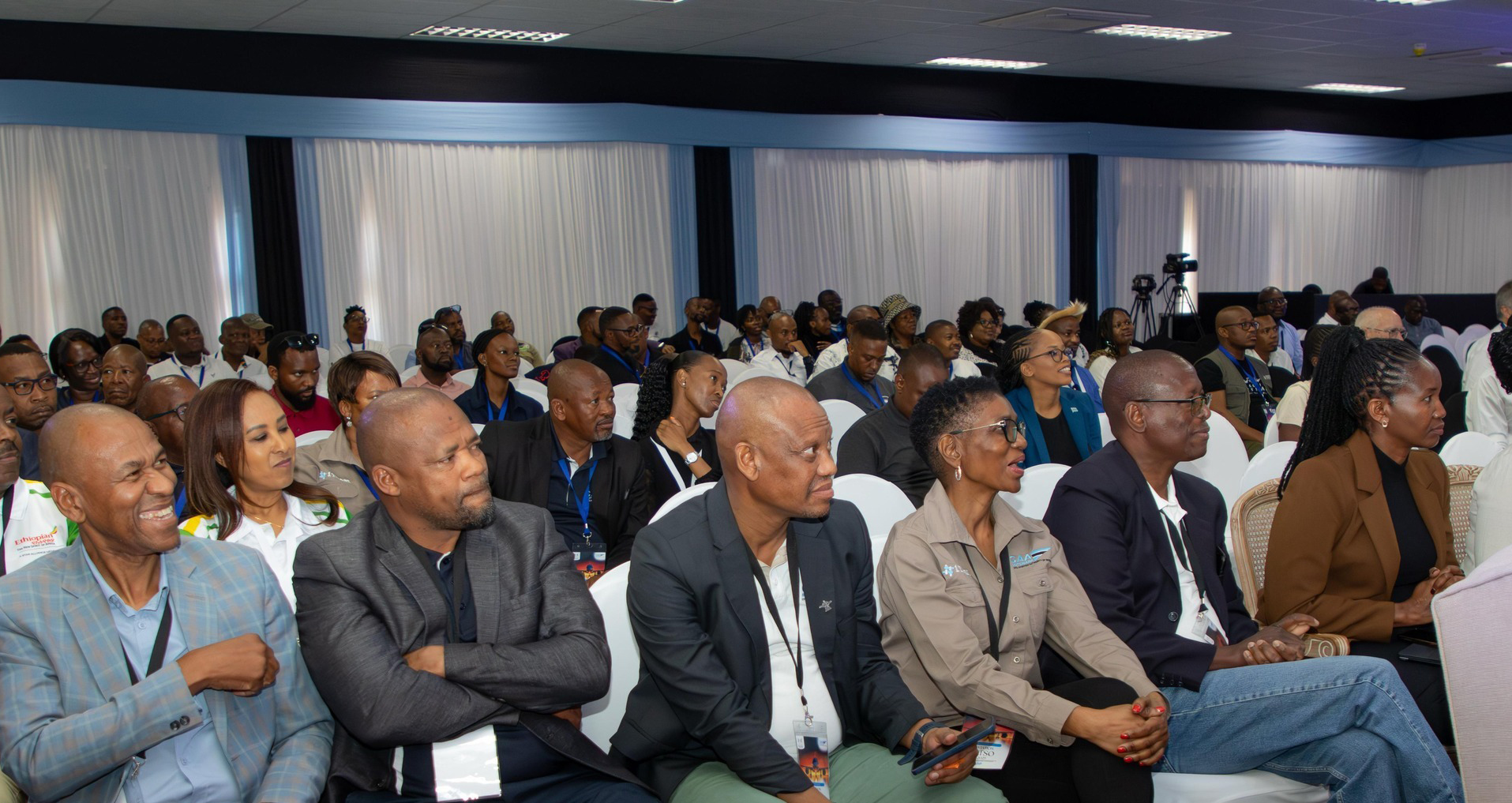
Mosinyi revealed three of the country’s four international airports, Gaborone, Kasane and Maun have already been certified, with Francistown’s certification expected to be completed soon.
“This signals to airlines and travelers that Botswana’s facilities are secure, reliable and efficient,” he explained.
Mosinyi also shed light on critical legislative reforms, noting that since 2021, CAAB has advanced and seen the passing of 23 pieces of legislation, including amendments to the Civil Aviation Act and 22 regulations.
“Consumer protection regulations are currently being drafted to protect the users of aviation services,” he added.
A major strategic development Mosinyi mentioned was the structural separation of CAAB into two distinct entities: a regulator and a service provider.
He credited President Boko for championing this initiative, which is in the process of having its respective Acts drafted for parliamentary consideration.

Mosinyi further acknowledged Boko’s role in ratifying key international aviation instruments, including the 2010 African Civil Aviation Commission constitution and the 2016 amendments to ICAO Articles 50 (a) and 56.
These amendments are aimed at improving ICAO’s governance and technical expertise. Article 50 (a) expands the ICAO Council from 36 to 40 members to better represent the growing number of member states, while Article 56 increases the Air Navigation Commission (ANC) from 19 to 21 members to provide more technical and operational expertise. Both amendments require ratification by 128 contracting states to take effect; by doing so, countries including Botswana demonstrate their commitment to international civil aviation standards.
Mosinyi emphasised that these achievements were not random but part of a calculated strategy to actively court international airlines to fly into Botswana.
He cited data from the International Air Transport Association (IATA) and ICAO, highlighting the significant economic benefits of increased air connectivity, particularly for tourism.
THE CAAB CEO also mentioned the impressive rebound in air passenger traffic, which is now at 97 percent of pre-pandemic levels and expected to surpass them this year.
The number of privately owned aerodromes, which have increased from 79 to 113, registered aircraft from 195 to 232 and drones have all seen a notable increase from 87 in 2019 to 286 by August.
It prompted Mosinyi to proclaim, “Our industry is back, ladies and gentlemen, back and better!”