


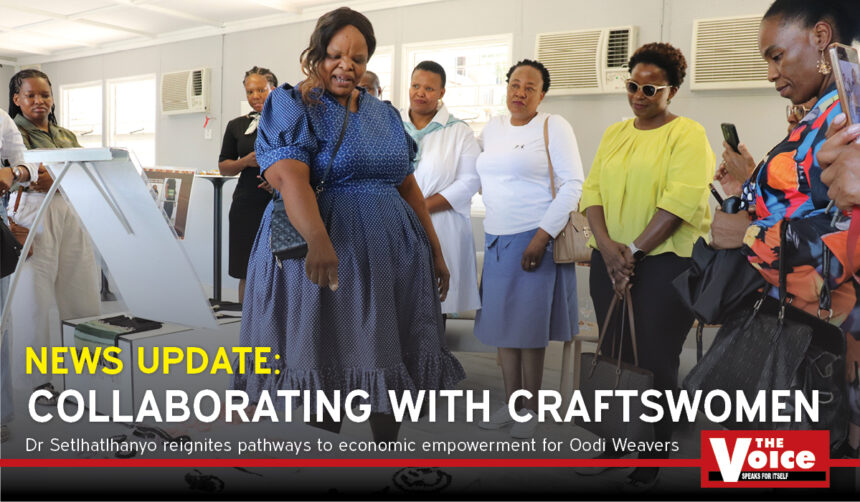
Dr Setlhatlhanyo reignites pathways to economic empowerment for Oodi Weavers
University of Botswana (UB) Lecturer in the Department of Industrial Design and Technology – Faculty of Engineering and Built Environment, Dr Keiphe Nani Setlhatlhanyo, recently unveiled an exhibition at the state-of-the-art UB UniPod that marked the culmination of a profoundly personal and collaborative journey.
Titled ‘Heritage Meets Fashion’, the showcase brought together her contemporary design vision and the meticulous ‘craftswomanship’of the Oodi Women Weavers, a philanthropic pursuit that not only revived their artistry but also reignited pathways to economic empowerment. “The showcase introduced the weavers’ newly modernised products to a contemporary market,” she says.
A 2010 Commonwealth Scholarship recipient and member of the Commonwealth Scholarship Commission (CSC) alumni network, Dr Setlhatlhanyo applied last September for a grant under the Alumni Community Engagement Fund (ACEF).
“As a Commonwealth alumna, I regularly receive updates from the CSC. When I saw the call for proposals for the 2025–26 ACEF, something within me felt compelled to apply. I submitted my proposal, and in September 2025, I was honoured to be selected as one of the awardees of the grant, under the theme ‘Building an Entrepreneurial Ecosystem,” she explains, adding the fund,introduced in 2015, supports alumni-led initiatives across diverse themes and delivery areas.
According to its website, ACEF focuses on empowering communities through small-scale initiatives designed to create long-term, meaningful impact. “The foundation supports alumni in delivering engaging activities that raise awareness and help individuals make meaningful changes within their communities.”

For the socially-conscious educator, the grant was more than professional recognition, it was an opportunity to act on a long-held conviction.
Having built her academic career in the Department of Industrial Design and Technology, a space traditionally male-dominated,Dr Setlhatlhanyohas consistently viewed design as a vehicle for social change, particularly for women whose work often goes unseen.“My passion has always been to use design to uplift the forgotten voices in our society, particularly women,” she says.
When she began collaborating with the Oodi craftswomen, she saw far more than technical skill.“I didn’t just see women making tapestries; I saw custodians of our national living heritage. These elderly women hold history in their hands. But economically, they were struggling. I wanted to prove that indigenous knowledge doesn’t belong in a museum gathering dust, it belongs in the modern economy, generating wealth and dignity for the women who create it,” she explains.
With ACEFsupport, Dr Setlhatlhanyo launched ‘The Oodi Weavers’ Tapestry: Weaving Tradition into the Future’. “The initiative aimed to empower the historic Oodi Weavers by co-creating a sustainable craft ecosystem, expanding their market reach to a modern audience, including the growing middle class and tourism markets,” she stated.

Detailing the creative process of herpassion project, Dr Setlhatlhanyo said she worked alongside her former students, youthful volunteers and the Oodi weavers.
“Rather than arriving in the village as an outside expert dictating changes, I employed a human-centred, co-creation approach. The initiative brought together an incredibly diverse group. I recruited former Industrial Design students: three young men and two young women alongside community volunteers in their twenties, thirties, and forties from Oodi and surrounding villages of Modipane and Matebeleng. They worked directly with the custodians of the craft: the original master weavers, all elderly women, the youngest of whom is 55. Tragically, the project began with five master weavers, but one passed away during the course of the initiative, making the mission to preserve and pass on their knowledge even more urgent,” she says, adding “The elders taught the younger women the patience and rhythm of the loom, while the youth helped the elders visualise how their traditional patterns could be adapted into modern fashion accessories and home décor.”
Staying true togrant’s theme, ‘Building an Entrepreneurial Ecosystem’ the affable academic further hosted training sessions for the villagers to impart much-needed business skills. “Beautiful products are only half the solution. To ensure the weavers’ financial independence, the workshops also included rigorous entrepreneurial training. Dr Gaanamotse, an entrepreneurship expert andUB lecturer, guided both the weavers and the youth through basic business management, costing, marketing, and how to identify new sales opportunities.”
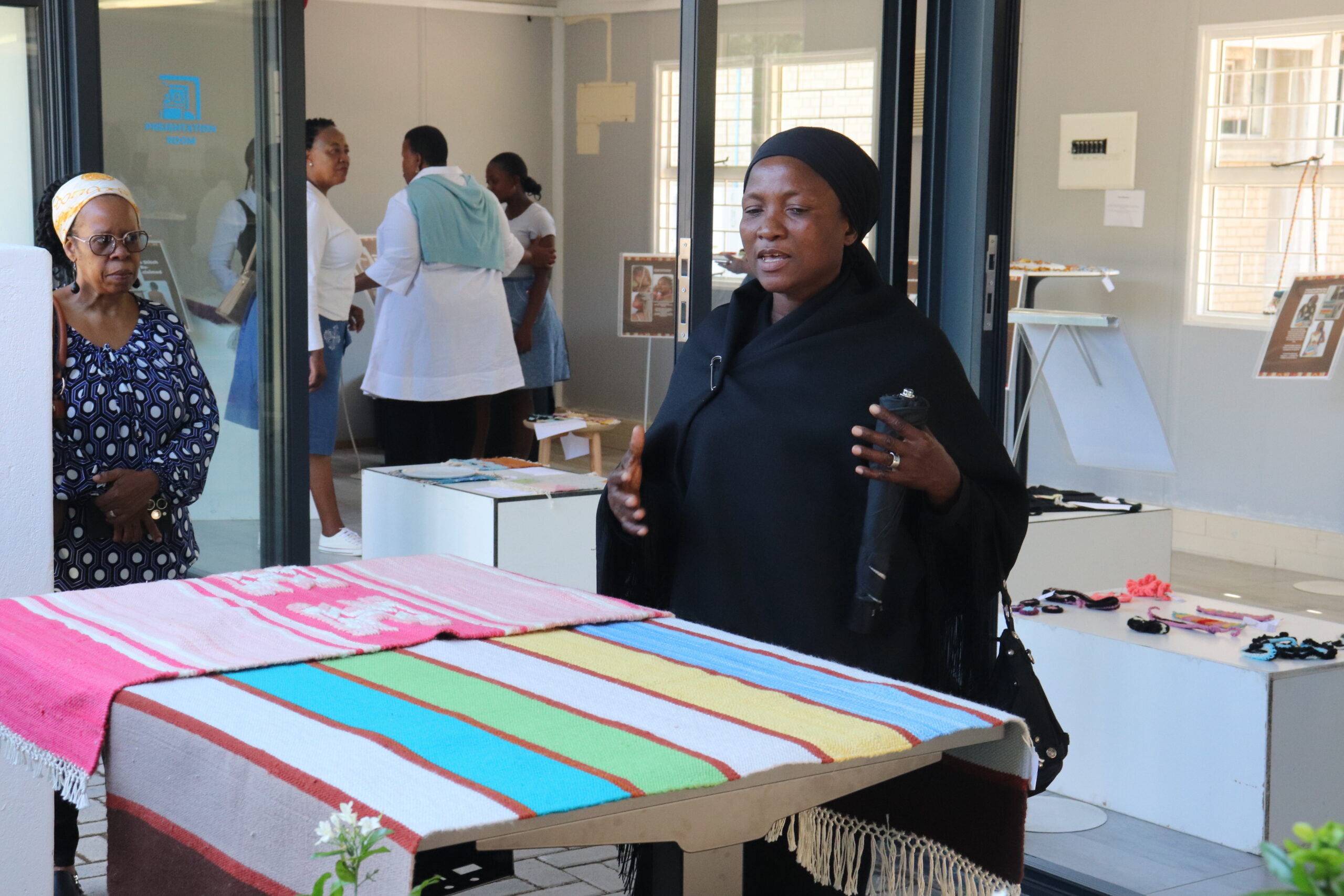
The UB UniPod proved to be an ideal platform to introduce the weavers’ work to new audiences, creatives and customers.
“The exhibition was more than a display of products; it was a statement of courage, courage to revive forgotten skills, to test new materials, and to imagine expanded futures for heritage craft.The sales on that day were phenomenal, but more importantly, the pride in their eyes was immeasurable. They realised their craft is not obsolete; it is highly valuable,” she said, adding, “The pieces reflected Botswana’s landscapes: the Okavango Delta, Kalahari dunes, and Jwaneng’s diamond legacy, alongside experimental fashion and sustainable adaptations designed for modern markets.”
During her presentation at the event, Dr Setlhatlhanyo discussed how universities can facilitate mutual knowledge exchange with communities.

“The initiative demonstrates how universities can act as collaborative platforms where knowledge flows both ways from academy to community and back again. By integrating heritage, design innovation, and entrepreneurship, the project contributes to a sustainable craft ecosystem capable of reaching Botswana’s growing middle class and tourism markets,” she noted, adding the weavers experienced newfound recognition as their longstanding craft was celebrated by a new audience, resulting in exceptional sales and, more importantly, a renewed sense of pride and validation in the value of their work.