



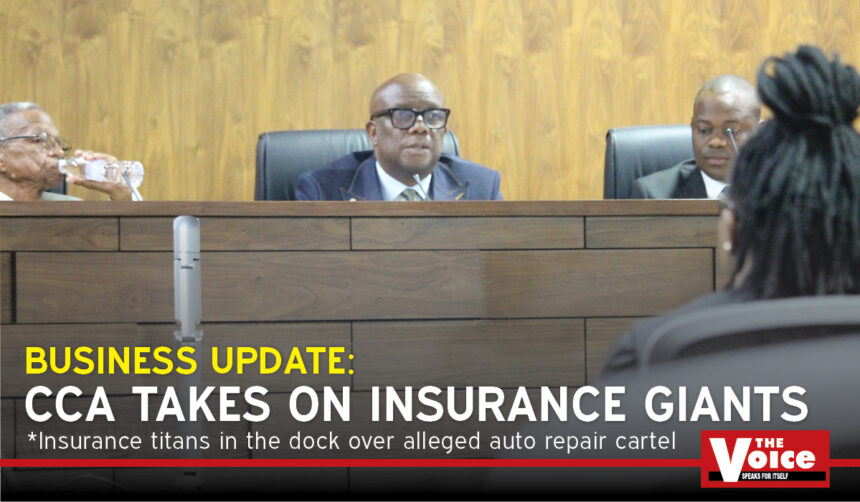
*Insurance titans in the dock over alleged auto repair cartel
A legal showdown is looming in Botswana’s insurance sector as some of the biggest insurers are set to defend themselves against allegations of anti-competitive conduct before the Competition Tribunal in August.
The Competition and Consumer Authority (CCA) has dragged the Botswana Insurance Company (BIC) and Old Mutual alongside spare parts company, Autoboys Evolve, accusing them of undermining fair competition in the motor vehicle repair industry.
Hollard Insurance, which was also implicated in the investigation, has since paid a P4.8 million admission of guilt and agreed to cooperate in the prosecution of the remaining two insurance giants who enjoy a huge market share estimated at over 30%.
According to an investigation by CCA, the case centres on claims that insurers and suppliers entered into arrangements that effectively dictated labour rates and terms of trade to panel beaters and repair workshops.
The CCA says the insurers agreed to appoint Autoboys Evolve as the preferred suppliers of spare parts for vehicles insured by them, potentially shutting out competing suppliers from the market.

Collectively, the three insurers involved command more than 50% of Botswana’s insurance market, giving the case far-reaching implications for the industry.
The investigation established that in February 2022, it was discussed that Hollard was to buy shares in Autoboys Evolve.
Documents before the Tribunal suggest that the discussions coincided with Autoboys being positioned as a key supplier of vehicle parts for Hollard-insured vehicles.

According to CCA, further meetings were held to review existing service level agreements affecting repairers.
“At the same meeting, it was further discussed that due to the introduction of Autoboys Evolve as a supplier, there was need to review the SLA terms on the 25% mark up due to repairers on parts. At a subsequent BIC management meeting it was discussed that Hollard had gone “live” with Autoboys and had agreed to the 5% for BIC,” the documents before the tribunal read in part.
CCA further alleges that Hollard later informed repairers that all vehicle parts for insured vehicles would be procured through designated suppliers, including Autoboys and approved dealerships.
The arrangements prohibited repairers from sourcing funds independently without authorization from Hollard.
The investigation found that BIC also issued a clearance certificate sometime in 2021 in which there was no specification on which entity would be supplying the parts to the repairer, but a year later it issued an altered version of the clearance certificate which specifically identified Autoboys as the supplier of parts in approved repair work.
“Similarly,Old Mutual, acting through its assessor Savvy Holdings (Proprietary) Limited, has taken away the repairers’ ability to supply parts and have stated that parts and sundries would be provided by it,” said the papers before the tribunal.

The Authority further found that repairers have had their labour rates fixed by the insurers at a rate of about P180 per hour, whilst prior to the advent of Autoboys, the insurers dictated a markup of 25% to the repairers.
However, since the introduction of Autoboys, they now do not receive any margin on parts purchased.
The investigation found that there was a similar pattern of conduct between BIC and Hollard in terms of payments to repairers.
BIC and Old Mutual contribute 25% of the workload and profits of the local repairers.
Another finding was that, where the repairers have refused to accept the trading terms set by the Insurers, they have been prevented from providing any services to them.
Any insured parties who insist on using repairers who have been removed from panels due to their refusal to accede to trading terms are given cash in lieu settlement by BIC.
The CCA warned that there will be foreclosure of repairers, loss of jobs, in the auto repairer market which, higher costs of repair, potential increase of premiums charged to policyholders, excess fees and high prices.