


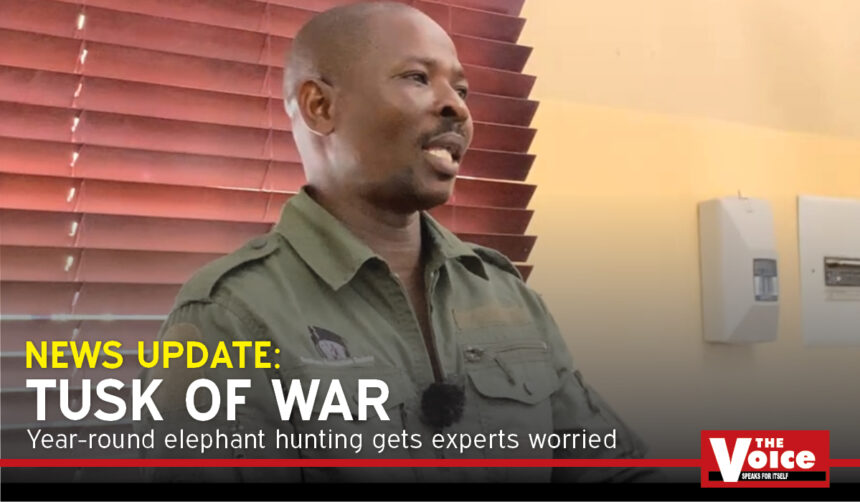
Year-round elephant hunting gets experts worried
The Elephant Society of Botswana has issued a stark warning that human-elephant conflict is poised to surge this year following a significant hike in hunting quotas and the introduction of a year-round hunting season.
Speaking at a media briefing in Maun last Friday, the society’s founder, Oaitse Nawa, expressed deep concern that constant hunting will lead to “hunting stress,” making the animals more aggressive towards people.
“Previously, hunting was restricted from April to September to allow animals a period of recovery,” Nawa explained. “This year, they will be hunted from January to December. This new pattern will expose the public to increasingly defensive and dangerous animal behaviour.”
The Department of Wildlife and National Parks recently released new quotas authorising the hunt of approximately 430 elephants; a steady climb from the 290 allowed when the hunting ban was lifted in 2019. While the government argues that hunting manages the world’s largest elephant population (roughly 130,000) and generates local revenue, Nawa maintains the policy will backfire.
Nawa described many of Botswana’s elephants as “refugees” that fled to the country to escape gunfire in neighbouring regions.

“They came to Botswana for safety. If we subject them to the same treatment, they will flee again,” Nawa warned. “When you shoot one animal, the rest of the herd becomes agitated. They become aggressive whenever they encounter humans or vehicles. With a prolonged season, we should expect more attacks.”
While acknowledging that small-scale hunting might be acceptable in specific areas, Nawa highlighted the damage caused by targeting “big tuskers.”
“By harvesting the bull, hunters are taking away the wisdom of the herd. It is the equivalent of going into a village and removing its chief,” he said. He further urged neighboring countries to open wildlife corridors to encourage natural movement and prevent overpopulation in single areas.

Two months ago, Elephant Society took government to court in an attempt to challenge the hunting quota, but withdrew the case after being advised that they could not legally challenge a draft policy. However, with the quota now formalized, the Society is prepared to return to court if necessary.
“We are against hunting yes. Our case however isn’t just about hunting; it’s about the human life aspect,” Nawa clarified. “We are advocating for life insurance and better compensation for survivors of human-wildlife conflict. We expect these insurance policies to be implemented around June.”
Nawa also suggested practical infrastructure changes to reduce conflict. During the dry season, elephants often move closer to human settlements in search of water. Nawa proposed creating more water holes deep within the wilderness to keep herds in their natural habitats and away from crops and property.
Ultimately, the Society is calling for a reduction in hunting periods and a shift in economic focus. “Instead of making money through hunting, communities can thrive through photographic tourism and media,” Nawa advised. “There is more long-term value in a living elephant than a trophy.”