



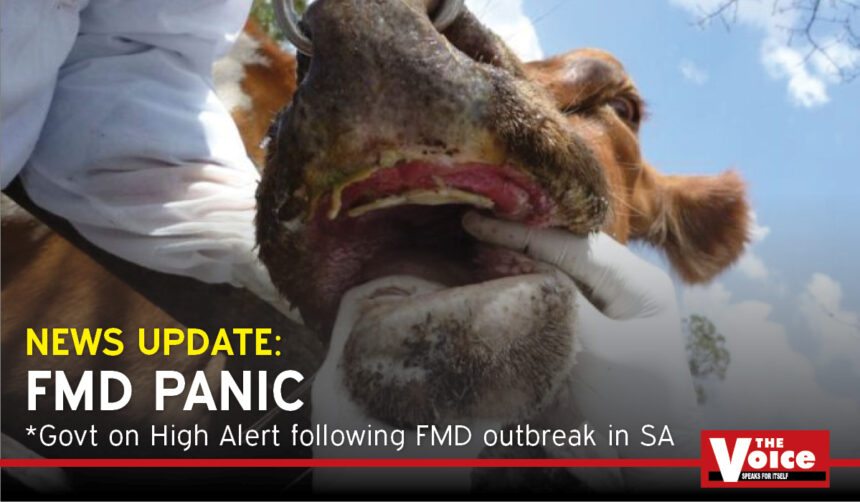
*Govt on High Alert following FMD outbreak in SA
As government guards against any possible outbreak of Foot and Mouth Disease(FMD) into Botswana, animals which will cross over to South Africa where the disease has been detected will be culled.
Following the outbreak of FMD in South Africa, government is doing all in its power to ensure that the country’s green zones maintain their status. This follows reports of FMD outbreak in South Africa’s North West province, which forms the southern boundary of Botswana.
Farmers whose livestock will be destroyed will receive P700 compensation per cow and P200 for a goat while repeat offenders will only be entitled to P200 compensation for a cow and P25 per goat.
Government erected a veterinary cordon fence along Molopo River between 2023 and 2024 in response to the FMD scare in South Africa’s North West Province and to protect Botswana’s cattle industry. It also drilled boreholes along the frontier to keep livestock away from the river and surface water sources close to the border.
Speaking at the recent tour of the livestock disease control cordon fence along Molopo River, Permanent Secretary in the Ministry of Lands and Agriculture Kabelo Ebineng urged farmers to look after their cattle and ensure no contact with those of their neighbours in South Africa.


“Control measures will include destroying of animals from Botswana that cross over to South Africa where the disease has been detected. Any outbreak of FMD within a 10 kilometre radius from the export abattoir could cause cessation of operations at Botswana Meat Commission,” said Ebineng adding that the disease also posed a threat to the imported bulls and semen at Ramatlabama Artificial Insemination Ranch.
Botswana is net beef exporter to the European Union market, therefore it is imperative to protect livestock industry from the dreadful disease, by observing the laid disease control protocols. Should the disease in the neighbouring South Africa make its way into Botswana a lot will be at stake.
“Farmers should look after their cattle and ensure no contact with those of their neighbours in South Africa. Control measures will include destroying of animals from Botswana that cross over to South Africa where the disease has been detected. Animal diseases control legislation empowers authorised persons to destroy animal infected or suspected of being infected or any animal which has been in contact with a diseased animal,” said Ebineng

Government erected a veterinary cordon fence along Molopo river between 2023 and 2024 in response to the FMD scare in South Africa’s North West Province and to protect Botswana’s cattle industry. Boreholes were also drilled along the frontier to keep livestock away from the river and surface water sources close to the border. However, there are reports of some farmers who continue to vandalise the fence and water their cattle in the river hence risking contact with South African livestock.
According to Botswana National Beef Producers Union (BNBPU) the disease poses an imminent risk of crossing into Botswana. “What began as an inland outbreak in SA has now reached an alarming proximity to our borders with confirmed cases reported just 40km from Botswana. This progression of the disease clearly demonstrates a rapid movement towards our territory. An FMD outbreak within our borders will have catastrophic consequences. Botswana beef will immediately lose its international markets access and premium value. Local cattle prices would plummet, devastating our economy and the livelihoods of many Batswana who depend on livestock sector,” said the BNBPU which has since launched an extensive public awareness campaign throughout the country.
Meanwhile, another outbreak of FMD has been reported in Zimbabwe’s Mangwe district which shares borders with Tutume, North East and Bobirwa districts. As a result, movement of cloven-hoofed animals out of, into and within the zones of 3b, 3c (Maitengwe ) and 6b and 7 is not allowed except for direct slaughter. Further, livestock from this zones are not eligible for slaughter for export markets.