



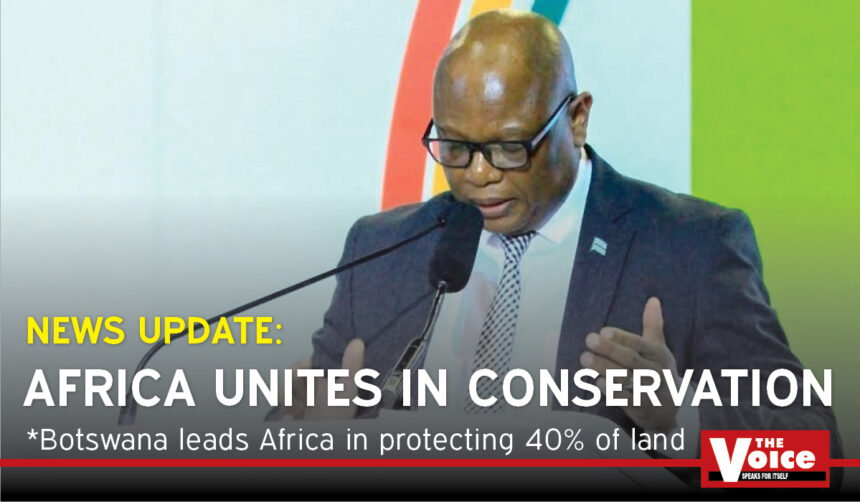
*Botswana leads Africa in protecting 40% of land
Botswana and other African nations have pledged to strengthen and expand trans-boundary conservation and protected areas, a critical step toward meeting the global target of protecting 30% of the planet by 2030.
Speaking at the occasion of the regional programme Design for Strengthening Trans-boundary Ecosystem Connections and Resilience in Africa this week, Minister of Environment and Tourism, Wynter Mmolotsi said that the move is encouraging, noting that practical steps are already being taken just a month after the summit.
“I commend all partners represented here today for their dedication and forward-looking efforts. Please rest assured that Botswana stands ready to play its part. Our country has long been recognized for its conservation leadership, yet we continue to learn and evolve, drawing lessons from our own experiences and those of others.”
The Minister said that in the performance of the global duty, Botswana has continued to ensure effective governance and legislative instruments and maintain high standards in the sustainable management of biodiversity rich ecosystems such as the Okavango Delta, the Makgadikgadi Wetlands system and in the Chobe area.
“As a grassland country, we are also investing in protecting and rehabilitating our rangelands, as a cornerstone of our agricultural sector, but also as an important ecosystem in its own right, as a habitat for biodiversity, but also as a carbon sink, ” said Mmolotsi adding that he is particularly proud to state that about 40% of Botswana’s land is under protected area status.

“Botswana recently, enacted the Community-Based Natural Resource Management (CBNRM) legislation to strengthen the CBNRM Policy of 2007. We are also advancing integrated implementation of our Wildlife, Forestry, Climate Change, and Agriculture Policies, recognizing their interdependence and the need for effective coordination, cooperation, and strong institutional frameworks.”
Mmolotsi emphasised that adopting a Transfrontier Conservation Area model is only the beginning and that its success requires continuous investment in policy support, financial resources, capacity building, stakeholder engagement, and holistic management. He said the objective is to collaboratively develop a project aimed building resilience of both people and ecosystems across Africa based on the 10:10:10 vision, and operationalise the Africa Leaders Gaborone Declaration on Biodiversity.