

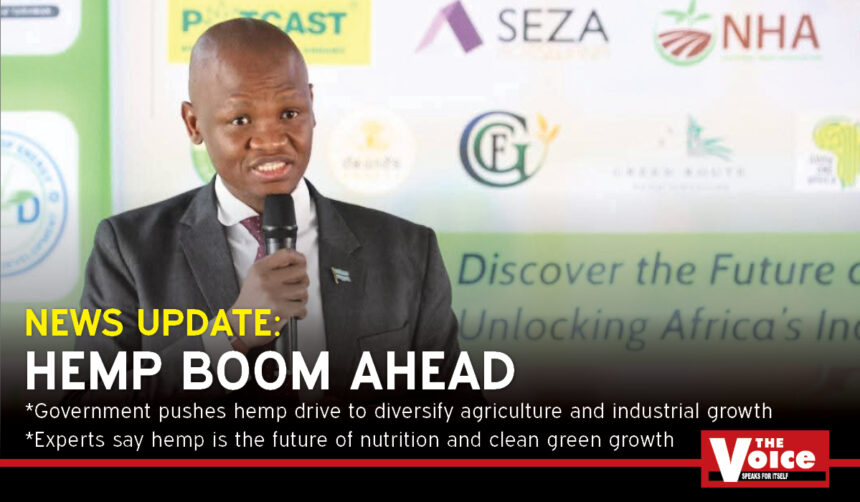
*Government pushes hemp drive to diversify agriculture and industrial growth
*Experts say hemp is the future of nutrition and clean green growth
Botswana is positioning itself to enter the billion-dollar global hemp industry, in a move to diversify agriculture, integrate climate-smart farming and unlock new value chains.
However, authorities have highlighted that the real wealth does not lie in exporting raw hemp, but in building industries that produce finished products for local, regional and international markets.
Acting Minister of Lands and Agriculture, Dr Edwin Dikoloti told a recent inaugural Botswana Hemp Impact Conference 2025, that industrial hemp presents a unique opportunity to complement the country’s agricultural portfolio with a high-value crop that stimulates industrialisation, attracts investment and creates jobs.
Parliament recently passed the Cannabis Bill, which legalised the cultivation and processing of industrial hemp and medicinal cannabis. As a result, hemp has shifted from being a prohibited plant and is now seen as a pathway to a cleaner, more resilient future. Globally, the hemp industry is booming and it continues to expand as countries turn to sustainable alternatives.
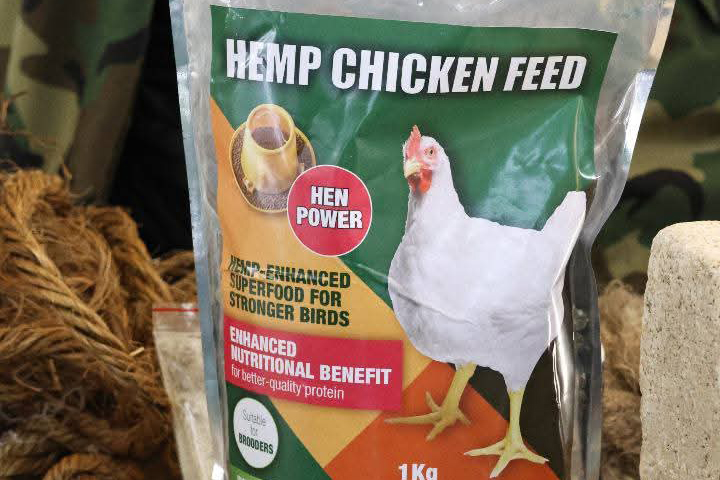
“Imagine Botswana exporting hemp-based textile products produced locally, such as; hemp oil, pharmaceuticals and supplements to improve public health. Imagine sustainable hemp trade revolutionising our construction sector and our livestock benefiting from hemp-based fodder. These are not distant dreams, there are possibilities within reach if we invest strategically and if we farm right,” said Dr Dikoloti explaining that the production of industrial hemp won’t be replacing indigenous crops or abandoning the food security mandate.

“This is a new industry for Botswana. We are still shaping policy, we are still building
knowledge and we are still learning from countries that have walked this path before. Much work lies ahead. We must refine our licensing frameworks, we must expand our research and extension services and we need to invest in processing facilities and develop fair markets that ensure global participation,” said Dr Dikoloti adding that production of hemp speaks directly to national goals of agricultural diversification, industrialisation and skills development.
For his part German industrial hemp expert and CEO of Fibamaxx, Michael Bieder, said Botswana holds enormous potential, but warned that the industry must be built
properly from the ground up, further adding that the country has adequate land and suitable climate for hemp production.
“You can’t build an industry without teaching people how it works. Farmers need to understand how to grow it. Processors need to know how to extract, store, and sell the products. People need to stop equating hemp with cannabis. This is not about drugs. Hemp is a nutrition and industrial product, it is about protein, fibre, and clean innovation,” said Bieder adding that there is an entire value chain that extends beyond planting and harvesting.

According to Bieder, Botswana is well-placed to set up modern hemp infrastructure, especially with up to 50 000 hectares of arable land available in between crop cycles. The Botswana Hemp Impact Conference 2025 was held under the theme, Discover the future of Hemp; unlocking Africa’s Industrial Potential.