



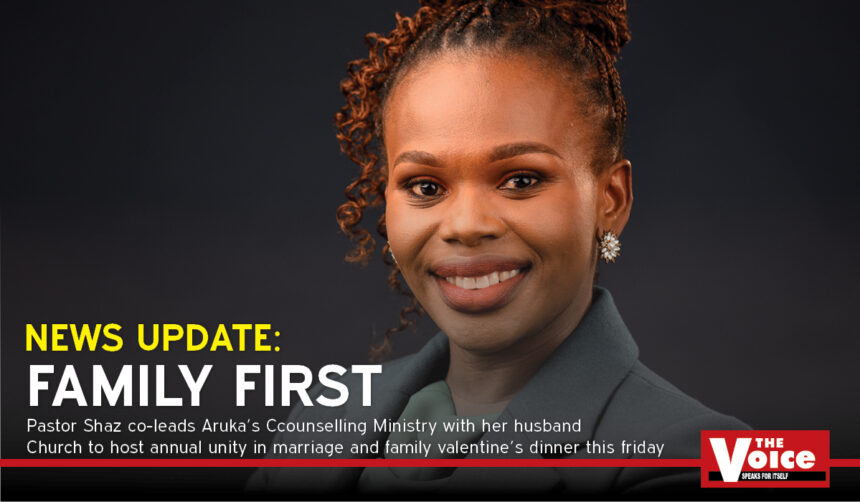
Pastor Shaz co-leads Aruka’s Ccounselling Ministry with her husband
Church to host annual unity in marriage and family valentine’s dinner this friday
THE family unit is often described as the backbone of society.
For Gcinekile Sharon Mogokgwane, co-founder of Aruka House of Restoration and wife of renowned Pastor Mmoloki Mogokgwane, that belief is not merely a social ideal; it is a biblical mandate.
Affectionately known as Pastor Shaz, the South African-born mother of three co-leads Aruka’s counselling ministry with a focus on healing emotional wounds, restoring identity and strengthening families.
Together with her husband, she champions the view that family lies at the heart of God’s design, and that raising whole individuals, not just spiritually saved ones, is essential.
“God created family for a purpose,” she says, adding, “When family does not function properly, there are bound to be problems in the individual’s soul and in the original identity that He has given us.”

Drawing from 1 Thessalonians 5:23, Pastor Shaz emphasises a holistic approach to faith,“‘May God himself, the God of peace, sanctify you through and through. May your whole spirit, soul and body be kept blameless at the coming of our Lord Jesus Christ.’ For too long, the church addressed people only spiritually. But we live on earth, and earthly experiences affect the soul,” she explains, adding when families are fractured through abandonment, neglect, or unresolved trauma, children often carry wounds into adulthood.
“These wounds shape identity, decisions, and relationships.”

Indeed, much of her work centres on children, addressing these invisible injuries.
While she and her husband conduct marital and pre-marital counselling together, they identified a gap in ministry when parents began raising concerns about their children’s emotional and psychological struggles.
With her natural affinity for young people, she stepped into that space. “Children are innocent. What alters them is the environment we raise them in,” she says.
Her calling is deeply personal. Pastor Shaz and her husband endured the devastating loss of two children, one at 13 months old and another just 10 days after birth. The experiences profoundly shaped her ministry.
“I have always valued family; I believe that is a gift God has given me. But the enemy attacked us in that area. My children helped me make major decisions in my life,” she reflects.
A trained food technologist, she turned down career opportunities first at the Ministry of Health’s National Health Laboratories and the Botswana Meat Commission to answer God’s calling, prioritising family and ministry.

Those choices puzzled many but ultimately laid the foundation for Aruka’s family-centred vision.
“My husband was based in Tsabong, and I was new in Botswana. I did not want to live separately and raise our child away from him. I also felt compelled by God’s leading.”
Those years, she explains, clarified her calling. “That is when I began to hear God clearly about my own assignment. I cherish my children because they helped me recognise God’s call on my life.”
Her own love story reads like a timely testimony and inspiration for the youth. Pastor Shaz met Pastor Mmoloki at the University of Johannesburg through Scripture Union when she was just 18. Their relationship, she says, was intentional from the start.
“We dated to marry, not to have fun. That clarity protected us,” she states matter of factly.
Raised in the Assemblies of God in South Africa, she grew up in a strict church culture where courtship was pastor-led and structured. Today, however, Aruka’s ministry stresses spiritual maturity, personal responsibility and conviction rather than rule-based fear.
“When you have the Spirit of God in you, it convicts you,” she says, referring to issues such as fornication, cohabitation and bearing children born out of wedlock.
“Guidelines are meant to protect dignity and purpose. But when dating lacks accountability, people test the waters and often run into complications.”
One such complication, she notes, is identity crisis, particularly in the absence of fathers. Pastor Shaz speaks candidly about fatherlessness and unclaimed children, issues she believes significantly affect Botswana and the broader African society. “Fathers play a crucial role in identity,” she says, citing Genesis 1:26–27 and the biblical order of creation.
“In an ideal world, every single man would lead with love, order, provision and protection. We must acknowledge Divine design.”
At Aruka House of Restoration, the teaching is simple – family provides three essential pillars: identity, belonging and security.
“That works best when both parents are present. Sometimes people struggle because they do not know who they are. My husband always encourages mothers to disclose to children where the fathers is from, and who the father is – even if they are late. I wish all men in Botswana would understand the role that God has given them, our society would be so much better,” she says, encouraging transparency about paternal identity, even in difficult circumstances.
“Children deserve to know where they come from.”
While acknowledging the realities of single-parent and extended-family households, she emphasises grace alongside principle.
“There is an ideal God designed, but there is also grace where life falls short.”
Unity in marriage, family and community remains central to Aruka House of Restoration’s mission. That focus is reflected in the ministry’s annual Valentine’s Dinner, now in its second year. Open to married couples, singles and those desiring marriage, this year’s theme, ‘Unity in Marriage and Family’, tackles cultural pressures, long-distance work placements, infidelity and the erosion of marital dignity.
Beyond church walls, Aruka House of Restoration offers free counselling services to the wider public, supported by a multidisciplinary team that includes retired academics and trained educators. The ministry also runs the Restoring Your Soul Programme, a 30-day online counselling journey designed to facilitate structured emotional healing.
For the Mogokgwanes, restoration always begins with identity, understanding who you are and whose you are.
“When people find their identity in God, they are positioned to love well, lead well and raise whole children,” she says in conclusion.